

1. What is 27-Hydroxycholesterol?
27-Hydroxycholesterol (27-HC), scientifically designated as cholest-5-ene-3β,27-diol, represents one of the most abundant oxysterols in human circulation. Unlike cholesterol, which serves primarily as a structural component of cell membranes and a precursor for steroid hormones, 27-HC functions as a biologically active lipid mediator with receptor-mediated signaling capabilities.
Structurally, 27-HC is generated through side-chain oxidation of cholesterol, with the hydroxyl group positioned at C27. This modification significantly increases the molecule polarity compared to its parent cholesterol, facilitating membrane incorporation and intercellular transport.
Biologically, 27-HC serves as the principal circulating oxysterol in humans, with serum concentrations approximately 10-100 fold higher than other oxysterols. This abundance makes 27-HC a dominant physiological ligand for nuclear receptors including estrogen receptors and liver X receptors.
._1774861304_WNo_387d191.webp)
2. Biosynthesis and Metabolism
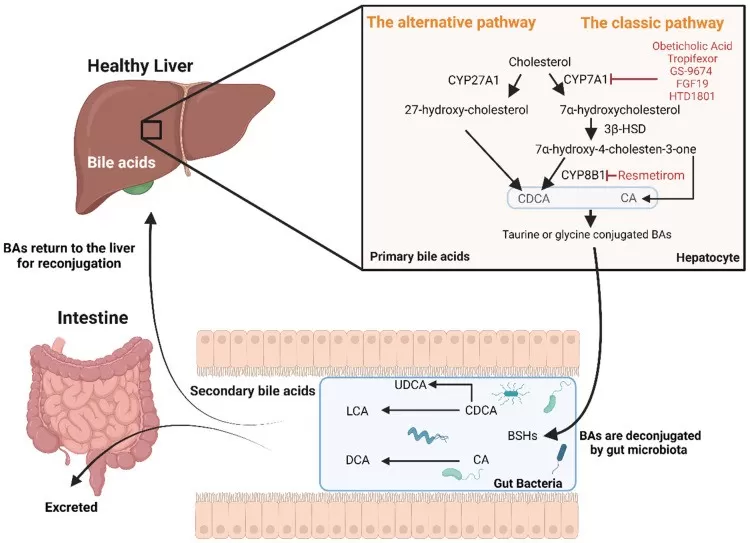
The production of 27-HC is primarily catalyzed by the mitochondrial enzyme cholesterol 27-hydroxylase (CYP27A1), a member of the cytochrome P450 family located on the inner mitochondrial membrane. CYP27A1 performs classic 27-hydroxylation of the cholesterol side chain, yielding 27-HC as the initial metabolite in the acidic bile acid synthesis pathway.
CYP27A1 is expressed in multiple tissues beyond the liver—including macrophages, endothelial cells, and various extrahepatic tissues—contributing to the systemic presence of 27-HC.
3. Molecular Mechanisms
The biological activities of 27-HC are predominantly mediated through its function as an endogenous ligand for nuclear receptors, which serve as ligand-activated transcription factors controlling genes involved in lipid metabolism, cell proliferation, and immune responses.
3.1 Estrogen Receptor Signaling
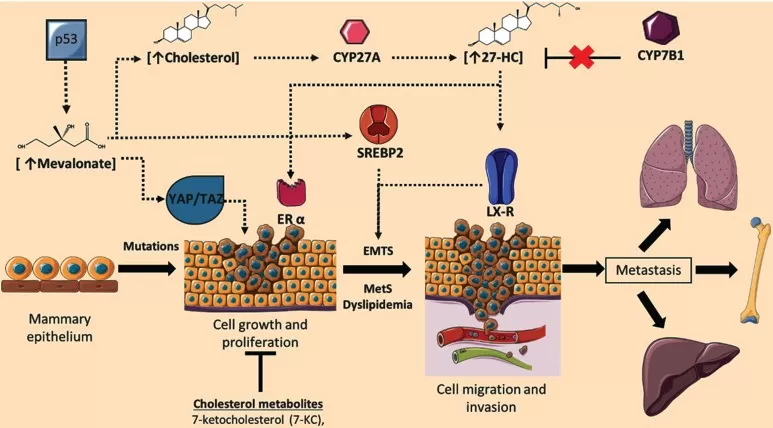
27-HC binds to both estrogen receptor alpha (ERα) and estrogen receptor beta (ERβ) with moderate affinity, acting as a selective estrogen receptor modulator (SERM). In ER-positive breast cancer cells, 27-HC can stimulate cell proliferation through ERα-dependent transcriptional activation.
3.2 Liver X Receptor Signaling
27-HC also functions as an LXR ligand, particularly activating LXRβ with high affinity. Through LXR signaling, 27-HC promotes cholesterol efflux by upregulating genes encoding cholesterol transporters, including ABCA1 and ABCG1.
4. 27-HC in Cancer Progression
The connection between 27-HC and cancer has garnered significant research attention, with accumulating evidence demonstrating that this oxysterol influences multiple hallmarks of cancer through diverse molecular mechanisms.
4.1 Breast Cancer
In breast cancer, 27-HC has been extensively studied for its role as an estrogen receptor ligand. In ER-positive (ER+) breast cancer, 27-HC acts as a tumor-promoting factor by stimulating ERα-dependent proliferation. Clinical studies have revealed elevated 27-HC levels in breast cancer patients, particularly those with ER-positive tumors.
4.2 Endometrial and Ovarian Cancer
In endometrial cancer, 27-HC levels have been correlated with tumor grade and progression. Similarly, in ovarian cancer, 27-HC has been detected at elevated levels in tumor tissues.
4.3 Other Cancer Types
Beyond hormone-related cancers, 27-HC has been implicated in prostate cancer, colorectal cancer, and melanoma. The oxysterol effects in colorectal cancer involve modulation of inflammation and cholesterol homeostasis within the tumor microenvironment.
4.4 Immune Modulation
27-HC influences tumor progression by modulating the tumor microenvironment. Through LXR signaling, 27-HC may promote an immunosuppressive microenvironment that facilitates tumor immune evasion.
MetwareBio: Your Trusted Partner for Sterol Profiling
As discussed above, 27-hydroxycholesterol (27-HC) represents a critical link between cholesterol metabolism and cancer biology. Accurate measurement of 27-HC and related oxysterols is essential for understanding their roles in tumor biology, biomarker discovery, and therapeutic targeting.
In research settings, reliable oxysterol analysis requires high-sensitivity LC-MS/MS platforms capable of detecting compounds at picomolar to nanomolar concentrations. MetwareBio's Steroid Hormones Targeted Metabolomics Service provides comprehensive profiling of 40 steroid hormone-related compounds, including 27-hydroxycholesterol, other oxysterols (25-HC, 7α,25-diHC), estrogens, androgens, and progestogens.
Our workflow is validated with 40 external standards and 23 internal standards, ensuring robust quantitative performance. The high-sensitivity LC-MS/MS platform achieves detection limits at the pg/mL level, suitable for analyzing clinical samples.
If you are interested in oxysterol profiling or steroid hormone analysis for your cancer research, please do not hesitate to contact us for more details.
Contact UsReferences
- Umetani, M., et al. (2006). The cholesterol metabolite 27-hydroxycholesterol promotes atherosclerosis. Journal of Clinical Endocrinology & Metabolism, 91(12), 5199-5206. https://doi.org/10.1210/jc.2006-0845
- Wu, Q., et al. (2013). 27-Hydroxycholesterol promotes breast cancer through estrogen receptor function. Endocrine-Related Cancer, 20(5), 673-685. https://doi.org/10.1530/ERC-13-0087
- Lin, C. Y., & Gustafsson, J. Å. (2015). Targeting liver X receptors in cancer therapeutics. Nature Reviews Cancer, 15(4), 216-224. https://doi.org/10.1038/nrc3909
- Marzaioli, V., & Rani, A. (2022). Role of 27-hydroxycholesterol in breast cancer. Journal of Steroid Biochemistry and Molecular Biology, 217, 106057. https://doi.org/10.1016/j.jsbmb.2021.106057
- Zhang, X., et al. (2022). 27-Hydroxycholesterol: a key player in estrogen-related cancers. Frontiers in Oncology, 12, 842156. https://doi.org/10.3389/fonc.2022.842156
- Raza, S., et al. (2023). 27-Hydroxycholesterol and its metabolic enzymes in breast cancer progression. Cancer Research, 83(7_Supplement), 2898-2908. https://doi.org/10.1158/1538-7445.AM2023-2898
- Kloudova, A., et al. (2024). The role of oxysterols in cancer. Journal of Cancer Research and Clinical Oncology, 150(3), 112. https://doi.org/10.1007/s00432-023-05567-4
