Crop quality research is no longer limited to visible traits or sensory description. Flavor, aroma, color, texture, nutrition, and bioactive compounds are shaped by gene regulation and metabolite accumulation across tissues, developmental stages, and processing conditions. Plant transcriptomics helps identify candidate biosynthetic genes and regulatory pathways, while metabolomics confirms which compounds actually change. This article explains how transcriptomics and metabolomics work together in crop quality, flavor, and specialized metabolite research, and how researchers can design omics strategies around specific quality traits.
Why Crop Quality Is a Multi-Omics Question
Crop quality is a composite phenotype. A fruit may taste sweeter because sugar accumulation increases, acidity decreases, aroma-active volatiles shift, or bitter phenolics decline. A grain may show improved eating quality because starch, amino acid, or storage-compound metabolism changes during filling. A medicinal or specialty crop may become more valuable because one class of flavonoids, phenols, terpenoids, or alkaloids accumulates at a specific developmental stage.
These traits cannot be fully explained by RNA-seq or metabolomics alone. Transcriptomics can suggest which pathway genes, transcription factors, and developmental programs are active. Metabolomics provides the biochemical evidence: which sugars, amino acids, organic acids, flavonoids, volatile compounds, pigments, or bioactive metabolites actually accumulate. A 2024 review of transcriptomics and metabolomics in plant quality and environmental response identified biosynthetic pathways, development and ripening, biotic and abiotic response, and methodologies as major research streams in this field (Yan et al., 2024).
For researchers, the practical question is not simply whether a sample has “good quality.” The stronger question is: which genes and compounds explain that quality trait, and can they be connected to a pathway that can be tested in follow-up experiments?
Which Metabolites Define Crop Quality?
Crop quality is usually not controlled by a single compound. A fruit, grain, tea leaf, medicinal plant, or vegetable may be valued for sweetness, acidity, aroma, color, texture, nutritional composition, or bioactive compounds. Each trait depends on a different set of metabolites, so the first step in a quality-focused multi-omics study is to define which biochemical readouts are most relevant to the phenotype.
This is where metabolomics adds value beyond transcriptomics. RNA-seq can identify candidate pathways, transcription factors, and biosynthetic genes, but metabolomics shows whether the compounds that define the quality trait actually accumulate. For example, aroma studies often require volatile metabolomics, while pigment or bioactive compound studies may require targeted flavonoid, anthocyanin, carotenoid, or specialized metabolite analysis.
The table below summarizes common crop quality questions and the metabolite readouts that are most useful for each research goal.
Table: Common Crop Quality Traits and Key Metabolite Readouts
| Research trait or question | Key metabolite classes | Recommended omics strategy | What it helps explain |
|---|---|---|---|
| Sweetness and taste balance | Soluble sugars, organic acids, amino acids | RNA-seq + widely targeted metabolomics | Links taste-related compounds with sugar, acid, and amino acid metabolism |
| Aroma and scent | Volatile organic compounds, terpenoids, phenylpropanoids, esters, eugenol-related compounds | RNA-seq + GC-MS volatile metabolomics | Identifies aroma compounds and candidate genes involved in scent biosynthesis or release |
| Color formation | Anthocyanins, flavonols, carotenoids, chlorophyll-related metabolites | RNA-seq + targeted pigment metabolomics | Connects visible color traits with pigment accumulation and transcriptional regulation |
| Bioactive compounds | Flavonoids, polymethoxylated flavonoids, phenols, alkaloids, specialized metabolites | RNA-seq + targeted or widely targeted metabolomics | Supports candidate gene discovery for functional compound biosynthesis |
| Grain or seed quality | Sugars, amino acids, lipids, starch-related metabolites, organic acids | RNA-seq + metabolomics | Explains how gene regulation and biochemical composition shape eating, cooking, or nutritional traits |
| Processing or postharvest flavor | Amino acids, sugars, flavonoids, phenols, volatile compounds | Time-course RNA-seq + metabolomics | Tracks how quality-related compounds change during processing, storage, or maturation |
What Plant RNA-seq Reveals in Quality Trait Studies
Plant RNA-seq is useful when the goal is to move from a visible or sensory phenotype to candidate biological mechanisms. In quality trait studies, RNA-seq can identify pathway genes, transcription factors, co-expression modules, and tissue- or stage-specific expression patterns that may regulate compound accumulation.
- Biosynthetic genes in flavonoid, anthocyanin, phenylpropanoid, terpene, carotenoid, sugar, and amino acid pathways.
- Transcription factors such as MYB, bHLH, WRKY, NAC, bZIP, and ERF families that may regulate quality-related pathways.
- Tissue-specific expression in peel, flesh, seed, flower, leaf, grain, or processed plant material.
- Developmental-stage changes that explain why quality traits appear at ripening, flowering, filling, drying, or processing stages.
- Candidate gene-metabolite modules for follow-up validation.
RNA-seq is especially valuable at the discovery stage. It can help narrow a broad quality question into testable candidates: which pathway is active, which tissue matters, which time point is informative, and which genes should be prioritized.
What Metabolomics Adds to Flavor, Aroma, and Specialized Metabolite Research
Metabolomics is essential when the research question is compound-driven. RNA-seq may show that a pathway is transcriptionally active, but metabolomics confirms which compounds are present, how strongly they change, and whether the compound pattern matches the phenotype.
For flavor studies, widely targeted metabolomics can profile sugars, amino acids, organic acids, flavonoids, phenols, and other taste-related compounds. For aroma and floral scent, GC-MS volatile metabolomics is more appropriate because many aroma-active compounds are volatile organic compounds. For color, flavonoid, anthocyanin, and carotenoid analysis can connect visible pigmentation with compound-level evidence.
The most useful multi-omics interpretation comes from matched samples. When transcriptome and metabolome data are generated from the same tissue, stage, and treatment group, researchers can ask whether candidate genes and compounds change in the same biological direction.
Development, Ripening, and Processing Can Reshape the Quality Metabolome
Quality traits are often dynamic. A fruit, flower, seed, or tea leaf can show different metabolite profiles across development, ripening, harvesting, storage, or processing. Sampling only one stage may miss the window when a key compound is synthesized, released, or converted into a downstream metabolite.
This is particularly important for aroma and processing studies. Volatile compounds may peak at specific flower-opening stages or times of day. Tea processing can induce dehydration, mechanical stress, oxidation, and enzymatic conversion, which together reshape amino acids, sugars, flavonoids, and other flavor-related compounds. Therefore, time-series designs often provide more biological value than a single endpoint comparison.
For researchers planning a crop quality project, the sample design should follow the trait biology. If the trait changes during ripening, collect developmental stages. If aroma is released at specific times, collect time-of-day samples. If processing creates the final product, sample the key processing steps.
Choosing the Right Omics Strategy for Quality Questions
The table above provides a practical starting point, but the final omics strategy should follow the biology of the trait. If the phenotype is taste-driven, widely targeted metabolomics can capture sugars, amino acids, organic acids, and phenolic compounds. If the phenotype is aroma-driven, GC-MS volatile metabolomics is usually more informative. If the project focuses on color or bioactive compounds, targeted flavonoid, anthocyanin, carotenoid, or specialized metabolite profiling can provide clearer compound-level evidence.
For the strongest interpretation, transcriptomics and metabolomics should be generated from matched tissues, developmental stages, and treatment groups. This allows researchers to ask whether candidate genes and quality-related metabolites change in the same biological direction.
Published Application Examples: From Citrus Flavonoids to Aroma and Grain Quality
Case 1: Flavonoid biosynthesis in Chachiensis citrus
In the Chachiensis citrus study, Wen et al. (2024) used genomics, transcriptomics, and metabolomics to investigate polymethoxylated flavonoid biosynthesis in Citrus reticulata cv. Chachiensis. The central research question was not only which flavonoids accumulate, but which genes may regulate the formation of these specialized metabolites.
Transcriptomics helped identify candidate biosynthetic genes and regulatory patterns associated with PMF accumulation. Metabolomics provided compound-level evidence for PMF distribution. A key result was the identification of CcOMT1, a putative caffeic acid O-methyltransferase proposed to participate in HPMF biosynthesis. This is a strong example of how crop quality research can move from “which compounds are present?” to “which genes may control compound formation?”
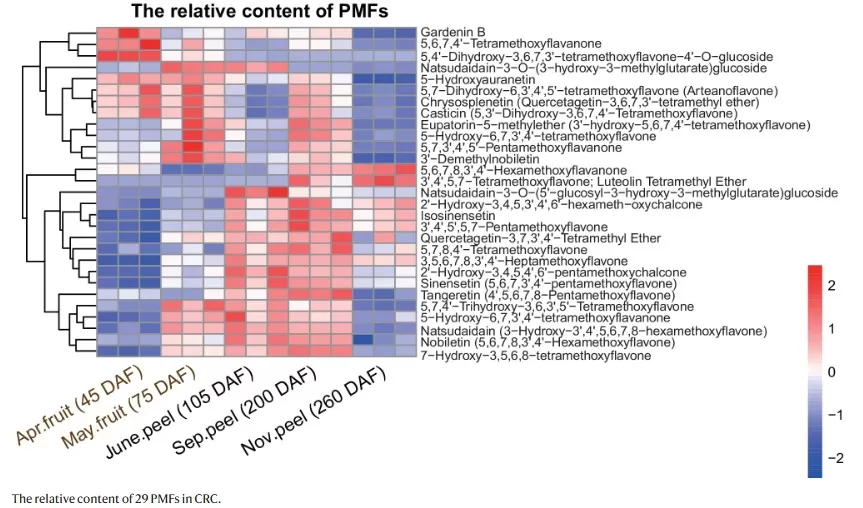
Figure 1. Polymethoxylated flavonoid accumulation during Citrus reticulata cv. Chachiensis development. Adapted from Wen et al. (2024), Nature Communications.
Case 2: Tea scent biosynthesis and release in Rosa gigantea
Aroma traits require careful sampling because volatile compounds are often tissue-specific, stage-dependent, and time-sensitive. Zhou et al. (2024) studied tea scent biosynthesis and release mechanisms in Rosa gigantea using multi-omics analysis, including volatile profiling and RNA-seq across flower stages, time points, and tissue types.
The metabolomics layer captured volatile compounds related to scent, while transcriptomics helped connect these VOCs with candidate biosynthetic pathways and gene regulatory networks. For researchers studying flower scent, fruit aroma, or flavor volatiles, this case shows why GC-MS volatile metabolomics and RNA-seq should be designed together rather than treated as separate experiments.
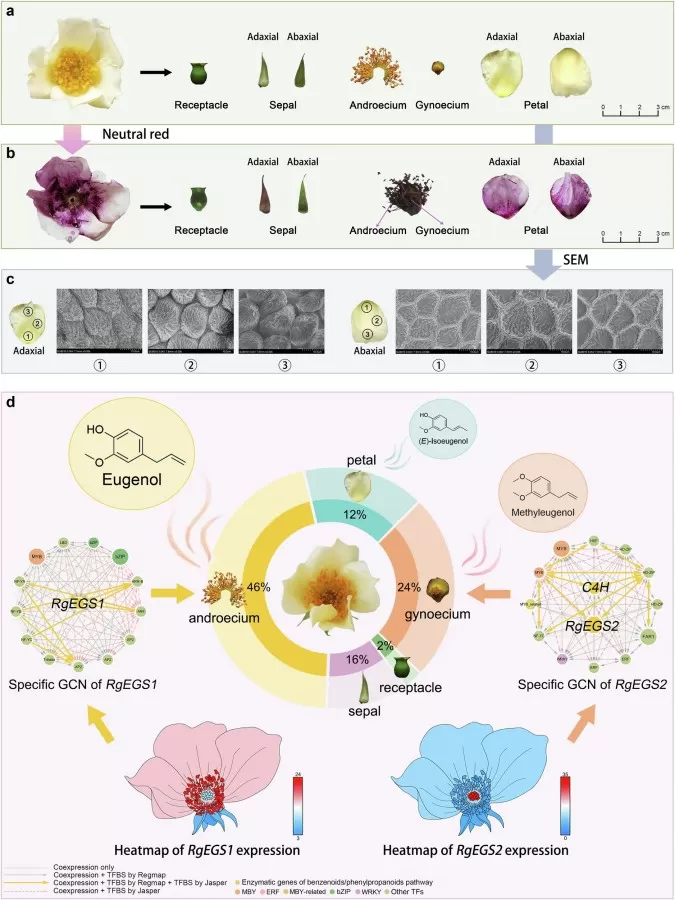
Figure 2. Spatial Fragrance Release in Rosa gigantea. Image reproduced from Zhou et al. (2024), Nature Communications.
Case 3: Grain quality and processing flavor
Crop quality is not limited to fruits and flowers. In rice, Zhang et al. (2023) used metabolome and transcriptome analysis to show that increased expression of Nhd1 mainly regulated carbohydrate and amino acid metabolism during the grain-filling stage, helping explain eating and cooking quality. This case is important because it connects a quality trait with developmental timing and grain metabolism.
Processing quality can also be studied with transcriptome-metabolome integration. In Tieguanyin oolong tea, Wu et al. (2023) profiled processing steps and found dynamic changes in flavor-related compounds, including amino acids, sugars, and flavonoids. Together, these examples show that multi-omics can support both biological trait discovery and product-processing research.
How MetwareBio Supports Crop Quality and Specialized Metabolite Research
MetwareBio supports plant quality studies with plant RNA-seq, widely targeted metabolomics, targeted metabolomics, flavonoid and anthocyanin analysis, GC-MS volatile metabolomics, and plant hormone profiling when relevant. These workflows can help researchers connect candidate genes with compound-level changes in flavor, aroma, color, grain quality, and bioactive metabolite accumulation.
MetwareBio’s current plant transcriptomics promotion starts at $99/sample, providing an accessible first layer for screening candidate genes and pathways. When the research question involves flavor, aroma, color, bioactive compounds, or processing-related quality, metabolomics can be added to provide biochemical evidence and improve pathway interpretation.
Contact MetwareBio to discuss a crop quality, flavor, or specialized metabolite study design.
Selected MetwareBio-Supported Publications in Crop Quality, Flavor, and Specialized Metabolite Research
| Literature title | Year | Sample or species | Quality area |
|---|---|---|---|
| An integrated multi-omics approach reveals polymethoxylated flavonoid biosynthesis in Citrus reticulata cv. Chachiensis | 2024 | Citrus reticulata cv. Chachiensis peel | Flavonoids / bioactive compounds |
| Multi-omics analyzes of Rosa gigantea illuminate tea scent biosynthesis and release mechanisms | 2024 | Rosa gigantea flowers | Aroma / volatile metabolites |
| Improving rice eating and cooking quality by enhancing endogenous expression of a nitrogen-dependent floral regulator | 2023 | Rice tissues / grain | Grain quality |
| Chromosome-scale genomics, metabolomics, and transcriptomics provide insight into the synthesis and regulation of phenols in Vitis adenoclada grapes | 2023 | Vitis adenoclada grapes | Phenols / fruit quality |
| An integrated metabolomic and transcriptomic analysis reveals the dynamic changes of key metabolites and flavor formation over Tieguanyin oolong tea production | 2023 | Tieguanyin oolong tea leaves | Processing flavor |
FAQ on Transcriptomics and Metabolomics for Crop Quality Research
How does transcriptomics help study crop quality?
Transcriptomics helps identify genes, transcription factors, and pathways that are active in quality-related tissues or developmental stages. It is useful for discovering candidate regulators of flavor, aroma, color, nutrition, grain quality, and specialized metabolite biosynthesis.
Why is metabolomics important for flavor and aroma research?
Metabolomics is important because flavor and aroma are defined by compounds, not only genes. Widely targeted metabolomics can measure sugars, amino acids, organic acids, flavonoids, and phenols, while GC-MS volatile metabolomics is better suited for aroma-active volatile organic compounds.
When should I use volatile metabolomics instead of widely targeted metabolomics?
Volatile metabolomics is recommended when the key phenotype is aroma, scent, or flavor volatiles. Widely targeted metabolomics is better for broader compound classes such as flavonoids, amino acids, sugars, organic acids, phenols, and many semi-polar metabolites.
Can RNA-seq identify candidate genes for flavonoid biosynthesis?
Yes. RNA-seq can identify pathway genes and transcription factors associated with flavonoid biosynthesis, especially when samples differ in flavonoid content. Metabolomics is needed to confirm which flavonoid compounds accumulate and whether gene expression matches compound-level changes.
Can plant RNA-seq be used as a first step before metabolomics?
Yes. Plant RNA-seq can be used as an accessible first layer to identify candidate pathways and genes. If the biological question involves compounds such as flavonoids, volatiles, sugars, amino acids, phenols, or pigments, metabolomics can be added for biochemical validation.
Should transcriptomics and metabolomics use matched plant samples?
Yes. Transcriptomics and metabolomics are most informative when generated from matched tissues, developmental stages, and treatment groups. Matched sampling allows researchers to compare whether candidate genes and quality-related metabolites change in the same biological direction, which improves pathway interpretation for flavor, aroma, color, and specialized metabolite studies.
Conclusion
Crop quality, flavor, and specialized metabolite research benefits from connecting gene regulation with compound-level evidence. RNA-seq can identify candidate pathways and regulatory genes, while metabolomics confirms whether flavonoids, volatiles, phenols, sugars, amino acids, pigments, or other quality-related compounds actually change. A staged RNA-seq-to-metabolomics strategy gives researchers a practical path from phenotype observation to biologically interpretable multi-omics evidence.
Read More: Exploring Multi-Omics for Crop Quality and Specialized Metabolites
These articles provide deeper context on the metabolomics platforms, transcriptomics services, and multi-omics integration strategies that support crop quality, flavor, and specialized metabolite research.
Learn how plant RNA-seq works as a first layer for identifying candidate genes, transcription factors, and pathway modules in quality trait studies. This service page covers library preparation, sequencing depth, and data analysis options for plant samples.
Understand the differences between three metabolomics approaches and when to use each one. This guide helps researchers choose the right strategy for flavor compounds, bioactive metabolites, and specialized metabolite profiling.
A practical example of how targeted metabolomics can track pigment-related quality traits during fruit ripening. This case study demonstrates the connection between gene regulation and compound accumulation in crop color research.
GC-MS profiling of plant surface compounds is essential for aroma and specialized metabolite studies. This article covers GC-MS and GCxGC-MS techniques for analyzing volatile and semi-volatile plant compounds.
When a single omics layer is not enough, three-layer multi-omics integration can connect gene expression, protein abundance, and metabolite accumulation. This service page explains how MetwareBio integrates transcriptome, proteome, and metabolome data.
Learn the principles and strategies for integrating proteomics with metabolomics data. This article covers correlation analysis, pathway mapping, and biological interpretation of multi-omics results for crop quality research.
References
- Yan Q, Zhang G, Zhang X, Huang L. 2024. A Review of Transcriptomics and Metabolomics in Plant Quality and Environmental Response: From Bibliometric Analysis to Science Mapping and Future Trends. Metabolites. https://doi.org/10.3390/metabo14050272
- Wen J, Wang Y, Lu X, et al. 2024. An integrated multi-omics approach reveals polymethoxylated flavonoid biosynthesis in Citrus reticulata cv. Chachiensis. Nature Communications. https://www.nature.com/articles/s41467-024-48235-y
- Zhou L, Wu S, Chen Y, et al. 2024. Multi-omics analyzes of Rosa gigantea illuminate tea scent biosynthesis and release mechanisms. Nature Communications. https://www.nature.com/articles/s41467-024-52782-9
- Zhang et al. 2023. Improving rice eating and cooking quality by enhancing endogenous expression of a nitrogen-dependent floral regulator. Plant Biotechnology Journal. https://doi.org/10.1111/pbi.14160
- Cheng G, Wu D, Guo R, Li H, Wei R, Zhang J, Wei Z, Meng X, Yu H, Xie L, Lin L, Yao N, Zhou S. 2023. Chromosome-scale genomics, metabolomics, and transcriptomics provide insight into the synthesis and regulation of phenols in Vitis adenoclada grapes. Frontiers in Plant Science, 14, 1124046. https://doi.org/10.3389/fpls.2023.1124046
- Wu et al. 2023. An integrated metabolomic and transcriptomic analysis reveals the dynamic changes of key metabolites and flavor formation over Tieguanyin oolong tea production. Food Chemistry: X. https://doi.org/10.1016/j.fochx.2023.100952