GC-MS Volatile Metabolomics Service
What Is Volatile Metabolomics
MetwareBio's GC-MS volatile metabolomics service is a dedicated VOC analysis platform developed for the sensitive detection and comparative profiling of volatile organic compounds through HS-SPME-GC-MS technology. By combining non-solvent headspace extraction, high-resolution chromatographic separation, and mass spectrometry-based compound identification, this service enables broad-coverage analysis of volatile metabolites across plant, animal, microbial, food, and other biological sample types. With curated in-house volatile metabolite databases and a standardized data-analysis pipeline, MetwareBio supports accurate qualitative annotation, robust semi-quantitative comparison, differential VOC screening, and biological interpretation to help researchers uncover volatile metabolic signatures associated with phenotype, environment, development, stress response, and disease.
Why Choose MetwareBio for Volatile Metabolomics?
MetwareBio supports volatile metabolomics with dedicated databases for both plant and animal research, covering broad VOC classes relevant to aroma biology, flavor science, physiology, and stress response.
|
Database |
Coverage |
Representative Chemical Classes |
|
Plant volatile metabolite database |
5,000+ compounds |
Esters, terpenoids, nitrogen/sulfur/heterocyclic compounds, ketones, aromatics, aldehydes, alcohols, hydrocarbons, acids, amines, phenols, halogenated hydrocarbons, ethers |
|
Animal volatile metabolite database |
4,000+ compounds |
Hydrocarbons, esters, ketones, nitrogen/sulfur/heterocyclic compounds, alcohols, aromatics, aldehydes, terpenoids, acids, amines, halogenated hydrocarbons, phenols, ethers |
Our GC-MS-based volatile metabolomics workflow integrates sample consultation, matrix-matched preparation, automated HS-SPME extraction, GC-MS acquisition, compound identification, semi-quantification, and statistical interpretation into a standardized pipeline. Combined with in-house databases and robust data analysis, it enables reliable volatile compound profiling with outputs such as QC assessment, multivariate analysis, differential metabolite screening, and optional rOAV-based flavor interpretation.




Quantification

Deliverables of the Volatile Metabolomics Service
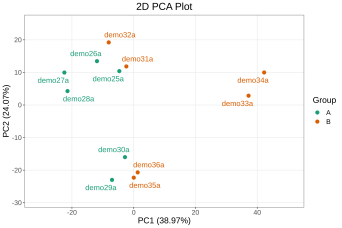
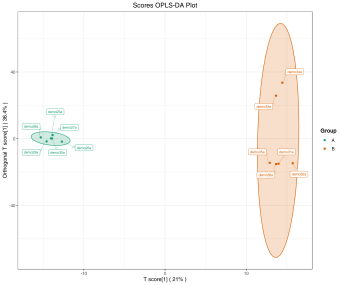
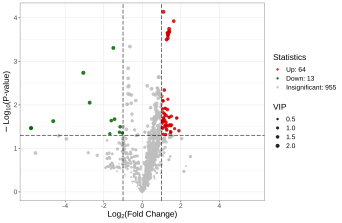
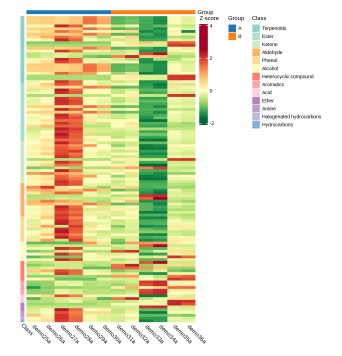
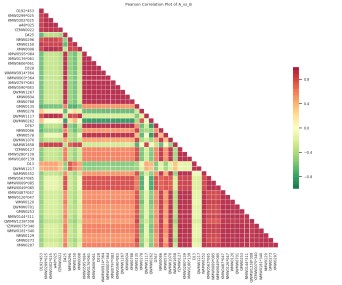
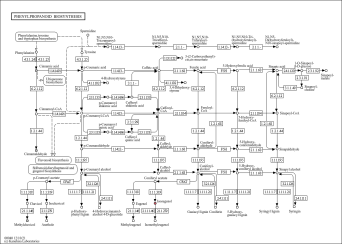
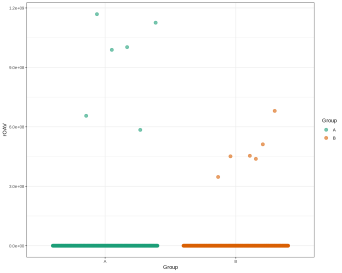
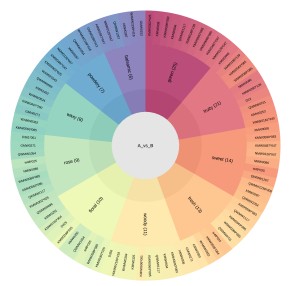
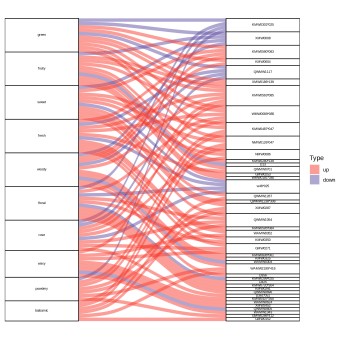
Our volatile metabolomics service delivers a focused analysis package from raw-data quality evaluation and metabolite identification to QC assessment, multivariate statistics, differential metabolite screening, and intuitive visualization. Key outputs include TIC review, relative-content tables, PCA and OPLS-DA, volcano plots and heatmaps, with optional KEGG enrichment and rOAV-based flavor analysis when applicable. This integrated workflow supports efficient biological interpretation and publication-ready reporting. Contact Us for Demo
Project Experience of Volatile Metabolomics Analysis
MetwareBio has extensive project experience in volatile metabolomics across a wide range of plant tissues and diverse food-, biofluid-, and animal-derived samples. Supported by a standardized HS-SPME GC-MS workflow, rigorous QC strategy, and in-house volatile metabolite databases, our platform enables reliable volatile compound profiling across complex sample matrices. As shown in the representative project data below, we have accumulated broad sample coverage and consistently achieved high metabolite detection depth, with more than 1,100 compounds detected on average across representative plant tissue projects and up to 1,895 compounds in individual samples. This extensive practical experience strengthens data robustness, improves analytical confidence, and supports high-quality volatile metabolomics studies in flavor research, food quality evaluation, plant biology, animal physiology, and biomarker discovery.
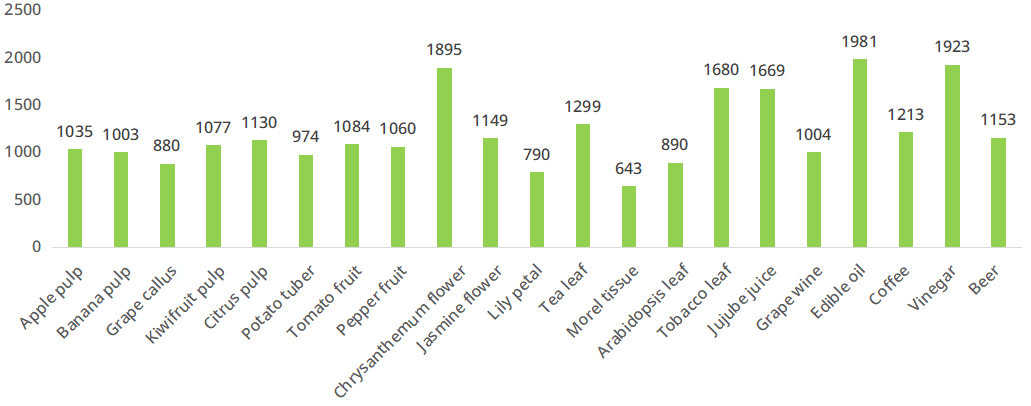
Number of Volatile Compounds Detected in Plant-Derived Samples by GC-MS Volatile Metabolomics
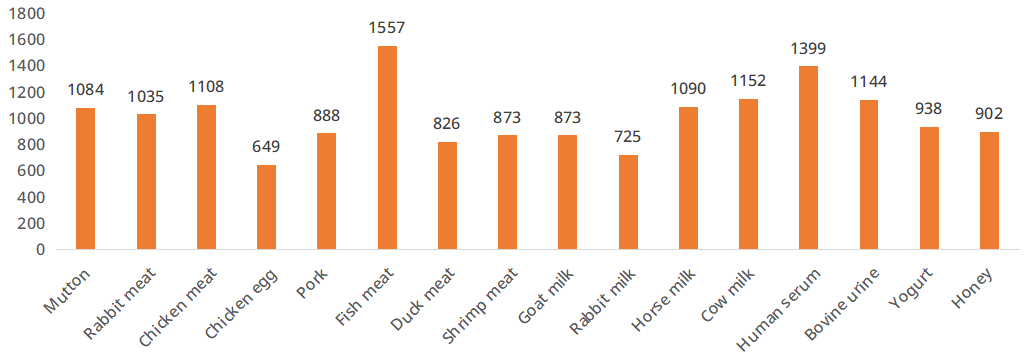
Number of Volatile Compounds Detected in Animal-Derived Samples by GC-MS Volatile Metabolomics
Applications of GC-MS Volatile Metabolomics
Dissect aroma composition, key odor-active compounds, process-induced flavor shifts, cultivar differences, and storage-related changes.
Study floral scent, fruit ripening, defense responses, stress-induced VOC changes, and active volatile traits linked to crop quality.
Profile volatile changes related to physiology, host response, metabolism, disease models, and biomarker exploration.
Characterize volatile outputs associated with microbial metabolism, fermentation conditions, and strain-specific aroma signatures.
Case Study in GC-MS Volatile Metabolomics
Volatile metabolomics reveals key tea-scent compounds and release dynamics in Rosa gigantea
In this Nature Communications study, the researchers investigated how the characteristic tea scent of Rosa gigantea is formed and released. Using MetwareBio’s GC-MS volatile metabolomics, they profiled floral VOCs across tissues and time points, showing that R. gigantea accumulated more aroma volatiles than the comparison rose and identifying benzenoid/phenylpropanoid compounds such as DMT, eugenol, methyleugenol, and (E)-isoeugenol as major contributors to the tea-scent phenotype. The volatile data also revealed clear spatial and temporal patterns of scent release, linking fragrance intensity to flower opening and pollinator-related timing. Overall, the study concluded that the unique tea scent is driven by expanded phenylpropanoid-related pathways and their regulation, while volatile metabolomics played a central role in defining the scent phenotype, pinpointing key VOCs, and connecting chemical traits with biological mechanism.
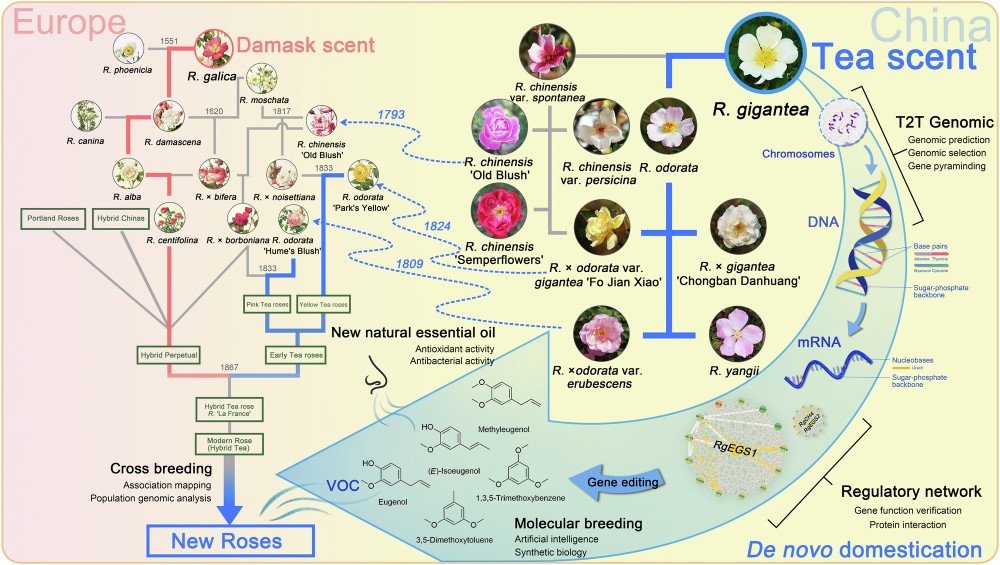
History and prospect of rose fragrance domestication.
Sample Requirements and Submission Notes for Volatile Metabolomics
Our volatile metabolomics service supports a broad range of sample matrices, including plant and animal tissues, biofluids, microbial and cell samples, root exudates, essential-oil extracts, and selected live samples without pretreatment. This broad sample compatibility enables flexible study design across plant biology, food science, animal physiology, microbiology and flavor research. To ensure reliable volatile profiling by HS-SPME GC-MS, samples should be tightly sealed and stored at −80°C as soon as possible after collection, protected from repeated freeze-thaw cycles, and shipped on dry ice to remain frozen during transit, thereby minimizing volatile loss and preserving sample integrity.
| Sample Category | Sample Examples |
Recommended Sample Size |
Minimum Sample Size |
|---|---|---|---|
| Plant Solid Samples | Stems, shoots, nodes, leaves, roots, flowers, fruits, callus tissue, soil, edible fungi, mosses, algae, and feed | 1.5 g | 500 mg |
| Oil-rich seed samples, such as sesame, peanuts, nuts, and various plant seeds | 1 g | 600 mg | |
| Plant Liquid Samples | Wine, vinegar, soy sauce, juice, fermentation broth, tissue fluids, and plant oils | 1.5 mL | 1 mL |
| Root exudates | 10 mL | 3 mL | |
| Extracts (essential oils) | 200 µL | 100 µL | |
| Animal Solid Samples | Tissues, feces, semi-solid samples not suitable for pipetting (such as honey, shrimp paste, yogurt), molds, and mycelia | 1 g | 600 mg |
| Animal Liquid Samples | Plasma, serum, milk, saliva, urine, exhaled breath condensate, rumen fluid and microbial cultures | 500 µL | 400 µL |
| Cell Samples | Plant or animal cells | 1 × 10⁷ cells | 1 × 10⁶ cells |
| Special Samples | Cultured samples containing liquid | 1.5 g | 500 mg |
| Swab samples | 20 swabs | 10 swabs | |
|
Live Samples (No Pretreatment) |
Flowers (<20 mm in diameter) | 20 flowers | 10 flowers |
| Insects (<20 mm in diameter), zebrafish organs, and insect organs | 20 samples | 10 samples |
FAQ about Volatile Metabolomics Service
Volatile metabolomics service is designed to profile volatile compounds and volatile organic compounds (VOCs) in biological, food, and environmental samples. In a typical GC-MS volatile metabolomics workflow, volatile metabolites are enriched by headspace solid-phase microextraction (HS-SPME), separated on a GC system, and detected by mass spectrometry for compound identification, semi-quantification, and downstream biological interpretation. This workflow supports volatile compound profiling for aroma research, food quality studies, plant stress biology, animal physiology, and biomarker discovery.
HS-SPME GC-MS is widely used for volatile compound profiling because it enables efficient enrichment of VOCs with strong sensitivity and broad compatibility across different sample matrices. In the current volatile metabolomics service, automated HS-SPME is combined with SPME Arrow and GC-MS/MS analysis, supporting robust VOC analysis under standardized analytical conditions. The workflow is therefore well suited for GC-MS volatile metabolomics projects requiring reliable detection of volatile metabolites in complex samples.
A GC-MS volatile metabolomics service can be applied to a broad range of sample types, including plant tissues, fruits, flowers, roots, seeds, fermented foods, edible oils, animal tissues, biofluids, microbial samples, cell samples, and other complex biological matrices. This broad sample compatibility makes volatile metabolomics and VOC analysis valuable for plant science, food science, nutrition, flavor chemistry, animal research, and translational studies. Broad sample handling is also consistent with the service-oriented webpage structure you are using as a reference for product positioning.
For reliable GC-MS volatile metabolomics and VOC analysis, samples should be tightly sealed and stored at −80°C as soon as possible after collection, protected from repeated freeze-thaw cycles, and shipped on dry ice to remain frozen during transit. In the current workflow, samples are stored at −80°C until needed, thawed on ice, and transferred into sealed headspace vials with TFE-silicone septa before HS-SPME extraction, which highlights the importance of airtight handling for minimizing volatile loss and preserving sample integrity.
This volatile metabolomics service is primarily based on internal-standard-assisted semi-quantification rather than absolute quantification for every detected compound. Relative content is calculated from the signal of each analyte and the internal standard, allowing robust comparison of volatile metabolite abundance across samples and experimental groups. This makes GC-MS volatile metabolomics especially useful for comparative VOC analysis, differential volatile compound screening, and flavor-related interpretation.
In GC-MS volatile metabolomics, volatile compounds are identified by integrating retention behavior, selected ion information, literature-supported references, and in-house database matching. The current workflow uses selected ion monitoring and combines retention consistency with characteristic ions to improve identification confidence. This database-assisted VOC analysis strategy strengthens volatile compound annotation and supports more reliable downstream biological and flavor interpretation.
A professional volatile metabolomics service should include strict quality control throughout sample acquisition and data analysis. In the current workflow, pooled QC samples are inserted during instrumental analysis, TIC overlap is used to assess signal stability, and CV distribution is evaluated to measure repeatability and overall data robustness. The report also indicates that QC CV values are used during data preprocessing, helping ensure that GC-MS volatile metabolomics results are stable, reproducible, and suitable for downstream VOC analysis.
A complete volatile metabolomics service typically includes data quality review, metabolite identification, relative-content tables, PCA, hierarchical clustering, correlation analysis, OPLS-DA, differential metabolite screening, and visualization such as volcano plots and heatmaps. When applicable, the workflow also supports KEGG annotation and enrichment as well as rOAV-based flavor analysis, which is useful for identifying key aroma-active compounds and interpreting flavor contribution. These outputs make GC-MS volatile metabolomics highly valuable for both VOC analysis projects and studies focused on flavor analysis, biological mechanism research, and biomarker discovery.