Single-Cell RNA Sequencing Service
What Is Single-Cell RNA Sequencing (scRNA-seq)?
(b) MGI workflow: left, DNBelab C-TaiM 4 single-cell droplet generator; middle, schematic of droplet microfluidic encapsulation of cells or nuclei with barcoded beads and reverse-transcription reagents; right, schematic of the barcoded bead and index-carrier structure used for mRNA capture and molecular labeling.
Why Choose MetwareBio’s Single-Cell Transcriptomics Service
Which scRNA-Seq Platform Should You Choose?
| Feature | 10x Genomics GEM-X | MGI DNBelab C-TaiM 4 |
| Core Technology | Droplet microfluidics with barcoded gel beads | Droplet microfluidics with a dual-bead barcoding system |
| RNA Profiling Strategy | Poly(A)-based 3′ gene expression profiling | Poly(A)-based 3′ gene expression profiling |
| Compatible Sample Types | Single-cell and single-nucleus suspensions | Single-cell and single-nucleus suspensions |
| Cell Size Compatibility | Generally ≤40 μm | 5–60 μm |
| Parallel Sample Capacity | 1–8 independent samples per chip | 1–4 independent samples per run |
| Target Cell Recovery | Approximately 500–20,000 cells per sample | Up to approximately 20,000 cells per sample |
| Sequencing Platform | Illumina | DNBSEQ |
| Sequencing Data Output | 100 Gbp/sample (PE150) |
cDNA library: 500M reads (73.5 Gbp) /sample;
Oligo library: 50M reads (3.7 Gbp) /sample |
| Primary Data Processing | Cell Ranger | C4Tools |
| Platform Selection Guidance | Suitable for projects requiring higher parallel sample capacity or established Chromium-compatible workflows | Suitable for projects using DNBSEQ-based workflows or requiring assay-specific assessment of challenging cell suspensions |
Single-Cell Transcriptome Analysis and Data Deliverables
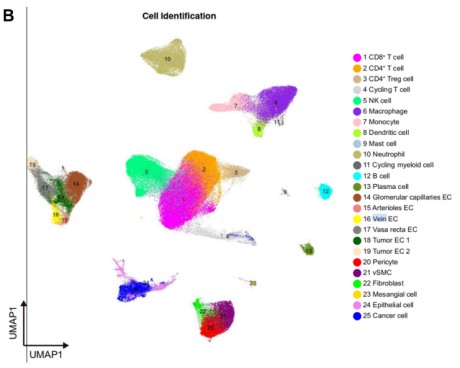
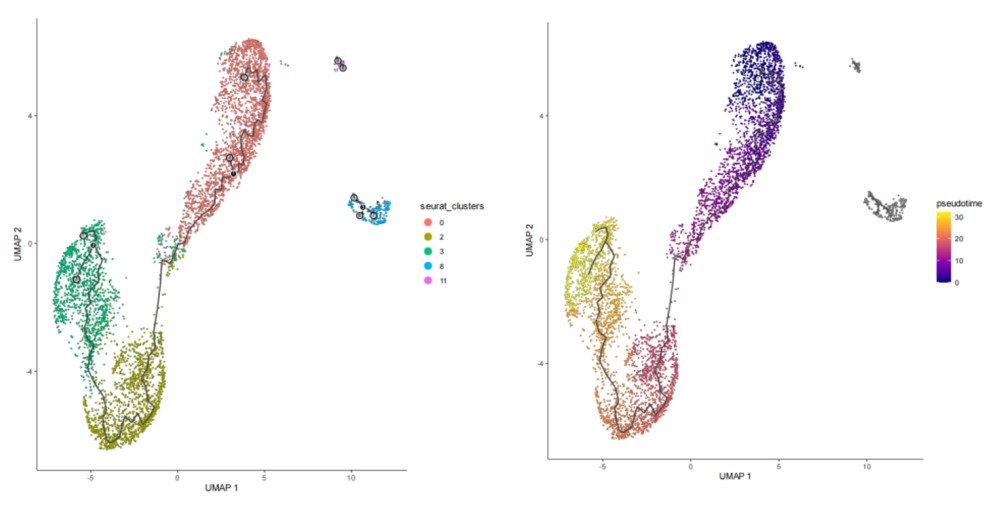
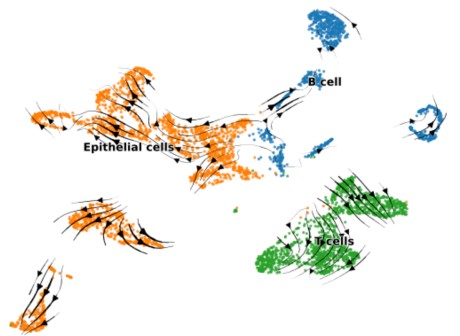
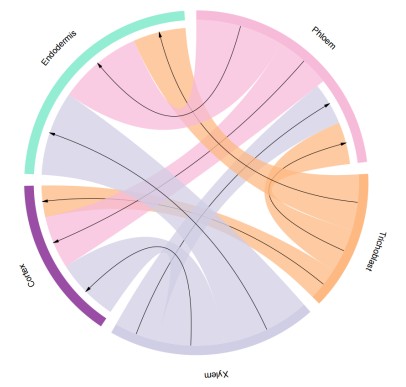
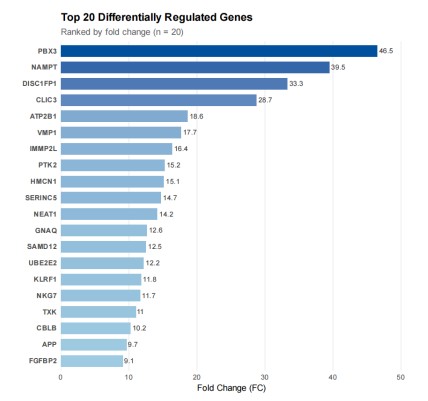
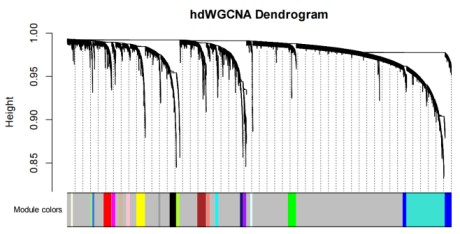
MetwareBio provides comprehensive single-cell RNA sequencing (scRNA-seq) data analysis and deliverables through a structured workflow that progresses from raw sequencing data processing to biological interpretation. Standard analysis includes data quality control and filtering, expression matrix generation, unsupervised clustering, marker gene identification, cell-type annotation, and differential gene analysis. For multi-sample studies, the workflow further supports comparative clustering, differential expression analysis between groups, and functional enrichment analysis to identify biologically meaningful changes across conditions. Depending on study design and data characteristics, advanced analyses can also be incorporated, including trajectory inference, RNA velocity, cell–cell communication, inferred CNV analysis, transcription factor regulatory analysis, and other customized analyses. Deliverables typically include raw data, processed expression matrices, quality control summaries, clustering and annotation results, differential analysis results, enrichment analysis, publication-ready figures, and a structured bioinformatics report for downstream interpretation and publication support.
Single-Cell Gene Expression Profiling Experience and Performance
| Sample Type | Input Type | Platform | Estimated Number of Cells/Nuclei | Median Genes per Cell/Nucleus | Reads Mapped to Genome (%) |
| Human Brain | Single Nuclei | 10x Genomics GEM-X | 11,344 | 1,456 | 89.60% |
| Human PBMCs | Single Cells | MGI DNBelab C-TaiM 4 | 13,285 | 1,723 | 93.63% |
| Human Glioma | Single Nuclei | 10x Genomics GEM-X | 17,156 | 1,600 | 94.00% |
| Human Liver | Single Nuclei | 10x Genomics GEM-X | 9,913 | 1,612 | 92.60% |
| Human Synovium | Single Cells | 10x Genomics GEM-X | 16,270 | 2,843 | 95.60% |
| Human Carotid Aneurysm | Single Nuclei | 10x Genomics GEM-X | 15,926 | 2,234 | 95.70% |
| Human Rectum | Single Nuclei | MGI DNBelab C-TaiM 4 | 9,247 | 1,477 | 87.06% |
| Mouse Substantia Nigra | Single Nuclei | 10x Genomics GEM-X | 25,057 | 1,604 | 93.60% |
| Mouse Striatum | Single Nuclei | 10x Genomics GEM-X | 27,509 | 1,444 | 94.20% |
| Mouse Colon | Single Cells | MGI DNBelab C-TaiM 4 | 15,335 | 1,804 | 92.18% |
| Mouse Spleen | Single Cells | MGI DNBelab C-TaiM 4 | 15,833 | 2,003 | 97.01% |
| Mouse Eye | Single Nuclei | MGI DNBelab C-TaiM 4 | 25,813 | 2,819 | 93.74% |
| Mouse Placenta | Single Cells | MGI DNBelab C-TaiM 4 | 17,219 | 1,935 | 92.46% |
| Mouse Cornea | Single Cells | 10x Genomics GEM-X | 13,636 | 3,622 | 94.80% |
| Mouse Lung | Single Cells | 10x Genomics GEM-X | 13,493 | 3,293 | 94.60% |
| Mouse Hippocampus | Single Nuclei | MGI DNBelab C-TaiM 4 | 20,302 | 2,631 | 96.04% |
| Mouse Small Intestine | Single Cells | 10x Genomics GEM-X | 12,368 | 2,276 | 93.60% |
| Mouse Brain | Single Nuclei | 10x Genomics GEM-X | 18,744 | 1,894 | 94.80% |
| Mouse Bone Marrow | Single Cells | MGI DNBelab C-TaiM 4 | 9,672 | 1,942 | 96.28% |
| Mouse Pancreas | Single Cells | MGI DNBelab C-TaiM 4 | 12,173 | 2,197 | 92.73% |
| Goat Ovary | Single Nuclei | MGI DNBelab C-TaiM 4 | 15,433 | 1,393 | 95.58% |
| Rabbit Skin | Single Cells | MGI DNBelab C-TaiM 4 | 12,654 | 1,545 | 91.13% |
| Sample Type | Input Type | Platform | Estimated Number of Cells/Nuclei | Median Genes per Cell/Nucleus | Reads Mapped to Genome (%) |
| Maize Leaf | Single Cells | MGI DNBelab C-TaiM 4 | 16,286 | 1,508 | 81.83% |
| Lettuce Root | Single Nuclei | MGI DNBelab C-TaiM 4 | 11,626 | 1,249 | 85.14% |
| Loquat Fruit | Single Nuclei | MGI DNBelab C-TaiM 4 | 15,327 | 2,526 | 88.21% |
| Poplar Stem | Single Nuclei | MGI DNBelab C-TaiM 4 | 15,891 | 1,751 | 88.10% |
| Grape Fruit | Single Nuclei | MGI DNBelab C-TaiM 4 | 12,508 | 1,341 | 94.31% |
| Cherry Root | Single Nuclei | MGI DNBelab C-TaiM 4 | 14,724 | 1,323 | 81.54% |
| Tomato Leaf | Single Nuclei | 10x Genomics GEM-X | 7,319 | 1,315 | 91.22% |
| Atractylodes lancea Stem | Single Nuclei | 10x Genomics GEM-X | 13,744 | 1,997 | 88.60% |
| Arabidopsis Leaf | Single Nuclei | MGI DNBelab C-TaiM 4 | 18,738 | 1,591 | 97.34% |
Single-Cell Transcriptomics Applications
Single-cell RNA sequencing enables comprehensive characterization of cell populations within complex tissues, supporting cell atlas construction, cell-type identification, rare cell discovery, and cellular heterogeneity analysis. It is widely used to define tissue composition and uncover previously unrecognized cellular subsets across normal, developmental, and pathological samples.
scRNA-seq reveals transcriptional changes associated with cell differentiation, lineage commitment, maturation, and cell-state transitions. By resolving intermediate and transient cell populations, it supports studies of embryonic development, organogenesis, stem cell biology, regeneration, and developmental processes in both animal and plant systems.
Single-cell transcriptomics helps dissect disease-associated cellular changes that may be obscured in bulk RNA sequencing. Applications include cancer, neurological disorders, inflammation, cardiovascular and metabolic diseases, enabling investigation of disease progression, drug response, therapeutic resistance, and treatment-associated changes in specific cell populations.
scRNA-seq is widely used to characterize immune cell composition, activation states, tumor–immune interactions, inflammatory responses, and cell–cell communication. These analyses help reveal how distinct cell populations coordinate within tissue microenvironments and identify signaling pathways or cellular subsets associated with immunity, disease progression, and therapeutic response.
Single-cell and single-nucleus transcriptomics enable cell-type-specific investigation of responses to environmental and physiological perturbations. Applications include injury, hypoxia, infection, metabolic stress, and regeneration in biomedical research, as well as drought, salinity, temperature, nutrient limitation, pathogen response, development, and agronomic trait regulation in plant research.
Single-Cell RNA Sequencing Sample Requirements and Shipping Guidelines
- Fresh-frozen tissues are accepted for routine single-cell or single-nucleus transcriptomic analysis.
- Human and Animal Tissues
- 10 mg for RNA extraction and quality control
- 100 mg for the formal experiment; for dense, calcified, or other difficult-to-process tissues, such as bone tissue, approximately 300 mg is recommended
- Plant Tissues
- 100 mg for RNA extraction and quality control
- 900 mg for the formal experiment; for aged, highly lignified, starch-rich, or polysaccharide-rich tissues, such as lignified stems and tubers, approximately 3–5 g is recommended
- Once sufficient tissue has been collected, snap-freeze samples in liquid nitrogen for at least 30 minutes to ensure complete freezing.
- Human and animal tissues: Store in liquid nitrogen before shipment.
- Plant tissues: Store at −80°C before shipment.
- For optimal sample quality, storage before analysis is recommended for no longer than one month. Ship frozen samples with sufficient dry ice and ensure that they remain completely frozen upon arrival.
Frequently Asked Questions About Single-Cell RNA Sequencing
Single-cell RNA sequencing (scRNA-seq) profiles gene expression at the individual-cell level, whereas bulk RNA-seq measures the average transcriptional signal across all cells in a sample. By separating mixed tissues into transcriptionally distinct cell populations, scRNA-seq can identify cell types, cell states, rare populations, and cell-specific molecular changes that may be masked by bulk transcriptomic analysis. This makes single-cell transcriptomics particularly valuable for studying cellular heterogeneity, development, disease mechanisms, immune microenvironments, and treatment response.
scRNA-seq analyzes RNA from intact cells, whereas single-nucleus RNA sequencing (snRNA-seq) profiles RNA from isolated nuclei. scRNA-seq is generally preferred when high-quality viable single-cell suspensions can be obtained, while snRNA-seq is especially useful for frozen, fragile, fibrous, highly differentiated, or difficult-to-dissociate tissues. The optimal strategy depends on sample condition, tissue properties, biological objectives, and whether intact cells can be recovered without introducing substantial dissociation bias.
| Feature | scRNA-seq | snRNA-seq |
| Analyzed Material | Intact single cells | Isolated nuclei |
| RNA Profile | Cellular RNA, including cytoplasmic and nuclear transcripts | Nuclear-enriched RNA, including more pre-mRNA |
| Preferred Sample Condition | Fresh tissues or high-quality viable cell suspensions | Fresh or frozen tissues |
| Sample Processing | Requires tissue dissociation into intact cells | Requires nuclei isolation |
| Dissociation Effects | More sensitive to dissociation-induced stress and recovery bias | Generally reduces extensive dissociation-related effects |
| Difficult Tissues | May be challenging for fragile, fibrous, or poorly dissociable tissues | Well suited to difficult-to-dissociate tissues |
| Plant Samples | Requires preparation of suitable protoplasts | Generally recommended for most plant tissues |
| Best Suited For | Samples yielding representative, viable single-cell suspensions | Frozen, complex, fibrous, plant, or challenging tissues |
For most plant tissues, MetwareBio generally recommends single-nucleus RNA sequencing (snRNA-seq) rather than protoplast-based scRNA-seq. Plant cell walls require enzymatic digestion to generate protoplasts, and digestion efficiency can vary substantially among species, tissues, and cell types. Protoplasting may also introduce transcriptional stress and preferential recovery of certain cell populations. Nuclei isolation avoids extensive cell-wall digestion and is therefore particularly suitable for frozen, aged, lignified, starch-rich, polysaccharide-rich, or otherwise difficult-to-dissociate plant tissues. Protoplast-based scRNA-seq can still be considered when a high-quality and representative protoplast suspension can be reliably prepared. The final strategy should be selected according to plant species, tissue characteristics, sample condition, and research objectives.
MetwareBio supports diverse sample formats for single-cell RNA sequencing (scRNA-seq) and single-nucleus RNA sequencing (snRNA-seq), including fresh tissues, fresh-frozen tissues, prepared cell suspensions, and liquid samples. Fresh tissues, cell suspensions, and liquid samples require time-sensitive transportation and should generally arrive at the laboratory within 24 hours for immediate processing. If delivery within this time window is not feasible, we generally recommend snap-freezing the tissue and submitting it as a fresh-frozen sample for single-nucleus RNA sequencing, which provides a more practical and reliable option for samples that cannot maintain sufficient cell viability during transportation.
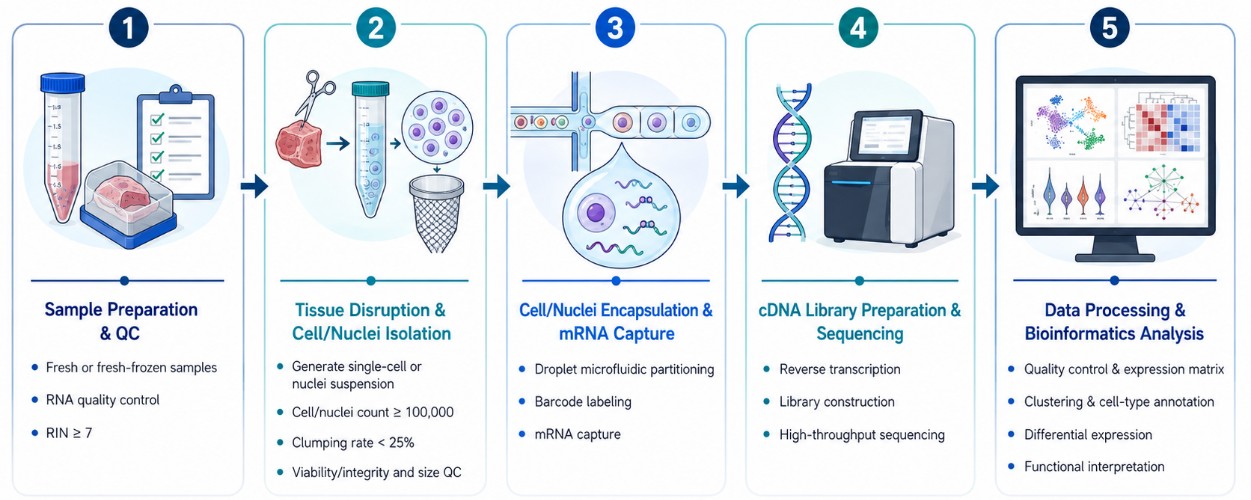
Rigorous sample and suspension quality control is essential for reliable single-cell RNA sequencing data. MetwareBio performs QC at both the tissue/RNA level and the cell or nuclei suspension level before droplet microfluidic processing.
For tissue-level QC, extracted RNA should have an RIN ≧ 7.0. Cell or nuclei suspensions are evaluated by microscopy and automated counting, with the following standard criteria:
- Total cell or nuclei count: ≧ 100,000
- Cell viability: ≧ 80% for single-cell suspensions
- Clumping rate: <25%
- Cell or nuclei diameter: 7–60 μm
- Microscopy: evaluation of cellular or nuclear integrity, aggregation, debris, and other impurities
For nuclei-based workflows, nuclear integrity and suspension quality are evaluated rather than conventional cell viability.
MetwareBio's droplet microfluidic workflows support an estimated cell number of up to approximately 20,000 per partitioning reaction. The actual number of high-quality cells or nuclei retained in the final dataset depends on sample quality, input concentration, cell viability or nuclear integrity, recovery efficiency, multiplet rate, and quality-control filtering. For projects requiring greater cellular coverage, multiple partitioning reactions can be incorporated, allowing the total number of profiled cells at the project level to exceed 20,000.
MetwareBio applies platform-specific sequencing strategies and standardized data delivery targets for single-cell transcriptome profiling. The standard sequencing strategy and data volume are designed to provide sufficient depth for gene expression quantification, clustering, cell-type annotation, and downstream bioinformatics analysis.
| Single-Cell Workflow | Sequencing Strategy | Standard Data Delivery |
| MGI DNBelab C-TaiM 4 | PE100 | 500 million reads per sample |
| 10x Genomics GEM-X | PE150 | 100 Gb per sample |
These are MetwareBio’s standard delivery specifications for routine single-cell RNA sequencing projects. Sequencing depth can be adjusted according to estimated cell number, sample complexity, transcriptomic diversity, and specific research objectives.