Serum and plasma are the two most widely used blood matrices in metabolomics, yet differences in coagulation, anticoagulant use, and sample processing can produce distinct metabolite profiles and influence biological interpretation. Plasma is often favored when the goal is to preserve the circulating metabolic state, while serum remains appropriate for many established cohorts and assay-specific applications. Selecting between them therefore requires consideration of both the biological question and the analytical strategy. This article compares the biochemical and analytical differences between serum and plasma, explains how matrix selection varies across metabolomics study designs, evaluates common plasma anticoagulants, and highlights key pre-analytical factors and study-design pitfalls. By linking matrix characteristics to specific research scenarios, it provides a practical framework for choosing a blood matrix that supports reproducible measurement and reliable interpretation of metabolomics data.
1. Serum vs. Plasma Metabolomics: How Sample Preparation Shapes the Metabolome
Serum and plasma originate from whole blood but undergo different processing before metabolomics analysis. These preparation steps influence the chemical environment of the sample and can alter the abundance of measured metabolites.
1.1 Plasma Preparation and Its Effects on the Metabolome
Plasma is obtained by collecting whole blood into an anticoagulant-containing tube and separating the cellular fraction by centrifugation. Because coagulation is inhibited, plasma avoids the platelet activation and clot-associated biochemical reactions that occur during serum formation, allowing the measured metabolome to more closely represent the circulating fluid phase.
Anticoagulation also introduces matrix-specific effects. Common additives such as EDTA, heparin, and citrate can influence the chemical environment of the sample, including the measurement of specific metabolites or analytical signals. Comparative studies have therefore shown that plasma collected with different anticoagulants can produce distinct metabolomic profiles (Kennedy et al., 2021). The anticoagulant used is consequently an integral characteristic of the plasma matrix rather than a neutral sample-collection detail.
1.2 Serum Preparation and Coagulation-Related Metabolic Changes
Serum is obtained by allowing whole blood to coagulate before centrifugation and removing the resulting clot and cellular components. During clot formation, platelets are activated and enzymatic and cellular reactions continue, which can release, generate, or consume metabolites before serum is separated.
These ex vivo reactions can produce systematic differences between the serum metabolome and the metabolic composition of circulating blood at the time of collection. Paired analyses have reported substantial concentration differences between serum and plasma across multiple metabolite classes (Liu et al., 2018). Coagulation effects can be particularly pronounced for platelet-associated compounds and lipid mediators, for which part of the measured serum signal may arise during clot formation rather than from the original circulating pool (Hagn et al., 2024).
1.3 Key Differences Between Serum and Plasma Metabolite Profiles
Serum and plasma share a large portion of the circulating metabolome, but systematic concentration differences have been reported across amino acids, acylcarnitines, phospholipids, fatty acids, carbohydrates, peptides, and other metabolite classes. The direction and magnitude of these effects are not completely consistent across platforms and studies, so it is unsafe to create a universal list of “serum-high” and “plasma-high” metabolites (Thachil et al., 2024). The practical implication is clearer: serum and plasma should be treated as different analytical matrices. A metabolite difference caused by clotting or anticoagulant chemistry can become indistinguishable from a biological group difference if matrix type is confounded with study group.
Table 1. Serum vs. Plasma Metabolomics: Key Differences That Affect Matrix Selection
| Factor | Serum | Plasma | Impact on Metabolomics |
|---|---|---|---|
| Coagulation | Occurs before separation | Prevented | Serum may contain clotting-associated metabolic changes |
| Anticoagulant | Usually absent in non-additive tubes | Required | Plasma may contain anticoagulant-related analytical effects |
| Circulating-state representation | Modified by clotting interval | Generally closer to the pre-clotting fluid phase | Relevant to discovery and clinical studies |
| Major matrix-specific variable | Clot formation and platelet activity | Anticoagulant and collection tube | Must be incorporated into study design |
| Interchangeability | No | No | Mixing matrices can confound biological comparisons |
2. Serum or Plasma for Metabolomics? How to Choose by Study Design
Matrix selection should follow the biological state and analytical endpoint the study intends to measure. Plasma is often favored for circulating-state discovery, while established cohorts, validated targeted assays, or coagulation-focused questions can make serum the more appropriate choice.
2.1 Untargeted Metabolomics and Biomarker Discovery: When to Prefer Plasma
For newly designed untargeted metabolomics or biomarker-discovery studies, plasma is generally the preferred starting matrix when the objective is to characterize the circulating metabolome at the time of blood collection.
This preference is based on sample biology. Plasma avoids the clotting phase required for serum preparation, thereby reducing ex vivo platelet activation and coagulation-related metabolic changes that can alter the measured profile. Its advantage is therefore not necessarily greater metabolite coverage; some compounds may show higher concentrations in serum. Instead, plasma generally provides a less coagulation-modified representation of the circulating fluid phase (Thachil et al., 2024).
Supporting evidence comes from Hagn et al., who observed close serum-plasma agreement for many metabolites but substantially larger differences among lipid mediators and platelet-derived signals. Their intervention experiment further showed that specimen choice could alter the apparent interpretation of drug response, providing direct evidence for using plasma when coagulation-related variation is undesirable (Hagn et al., 2024).
2.2 Targeted Metabolomics: Choose by Analyte and Assay Requirements
For targeted metabolomics, matrix selection should first consider the biology and analytical behavior of the predefined metabolites. Plasma is preferred when target concentrations are susceptible to coagulation or platelet activation, whereas serum or an alternative plasma type may be more appropriate when anticoagulants interfere with the analytes or their measurement. When both matrices demonstrate acceptable analytical performance and neither process materially affects the targets, plasma is a reasonable default for a newly designed study focused on circulating concentrations, while established serum-based studies can retain serum.
Matrix-specific assay performance should also be confirmed for quantitative applications because extraction recovery, matrix effects, calibration behavior, and analytical precision can depend on the sample matrix. Established assays should therefore be used with the matrix for which suitable performance has been demonstrated (Sarmad et al., 2023).
2.3 Lipidomics and Lipid Mediators: When to Prefer Plasma
Matrix selection is particularly important for platelet-sensitive lipids and lipid mediators because coagulation activates platelets and can generate or release bioactive lipid species after blood collection. Serum may therefore contain clotting-derived signals that do not reflect the pre-clotting circulating lipid profile.
Hagn et al. observed substantially greater serum-plasma differences among lipid mediators than across the broader metabolite panel. Their aspirin intervention further showed that changes in thromboxane B2 and 12-HETE measured in serum were partly driven by lipid formation during ex vivo coagulation, demonstrating how matrix choice can influence interpretation of treatment-related effects (Hagn et al., 2024).
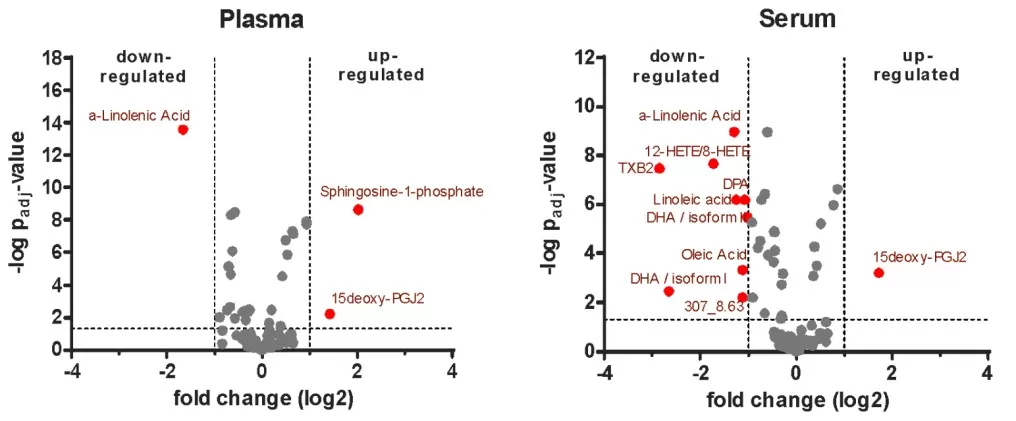
Figure 1. Serum and plasma can yield different apparent lipid-mediator responses to aspirin. Adapted from Hagn et al., 2024, Journal of Proteome Research, CC BY 4.0.
When the objective is to measure circulating eicosanoids, platelet-associated lipids, inflammatory lipid mediators, or related pharmacological responses, plasma is therefore generally preferred. For broader lipidomics profiling, serum and plasma can both be suitable, and matrix selection should also consider assay performance, anticoagulant compatibility, and study consistency.
2.4 Existing Cohorts and Longitudinal Studies: Maintain Matrix Consistency
For existing cohorts, biobanks, and ongoing longitudinal or multicenter studies, maintaining the established blood matrix is generally more important than switching to a theoretically preferred alternative. Serum and plasma, as well as plasma collected with different anticoagulants, can produce systematic metabolic differences that may become confounded with study site, recruitment period, treatment group, or time point (Kennedy et al., 2021).
A cohort that has been consistently collected as serum should therefore usually remain serum-based, provided that sample collection, processing, and storage are sufficiently standardized. The same principle applies to plasma studies: anticoagulant and collection-tube type should remain consistent across groups and time points. For archived samples, the key consideration is whether relevant pre-analytical information is documented and comparable between study groups. Introducing a new matrix midway through a study can compromise comparability more than it improves representation of the circulating metabolome.
2.5 When Serum Is Preferred for Metabolomics
Serum may be preferable when plasma anticoagulants interfere with the metabolites or analytical method of interest. EDTA, citrate, and heparin can produce analyte- or method-specific effects, including altered ionization, background signals, or interference with particular compounds. When these effects overlap with key analytical targets, a compatible plasma type or serum may provide a more appropriate matrix.
Serum can also be informative when coagulation-associated biology is itself part of the research question. Platelet activation and clot formation generate metabolic changes that are undesirable in studies of the pre-clotting circulating metabolome but may become relevant endpoints in studies of platelet function or coagulation. For example, serum thromboxane B2 generated during controlled ex vivo clotting has been used to assess platelet cyclooxygenase activity in pharmacodynamic studies (Petrucci et al., 2024).
2.6 Serum vs. Plasma Metabolomics: Practical Selection Guide
Serum-versus-plasma selection can be reduced to three priorities: the biological state to be measured, the compatibility of the matrix with the target analytes and analytical method, and consistency across the study. For newly designed discovery studies, plasma is generally preferred when the circulating metabolome is the primary target; for targeted studies, analyte behavior and matrix-specific assay performance become more important; and for existing cohorts, maintaining the established matrix usually takes priority over switching.
The following guide summarizes the recommended matrix for common metabolomics study scenarios and the reasoning behind each choice.
Table 2. Serum vs. Plasma Metabolomics: Practical Matrix Selection Guide
| Study Scenario | Preferred Matrix | Key Rationale |
|---|---|---|
| New untargeted metabolomics or biomarker-discovery study | Plasma | Better preserves the pre-clotting circulating metabolome |
| Drug-response or intervention study focused on circulating changes | Plasma | Reduces coagulation- and platelet-derived ex vivo effects |
| Targeted metabolomics; both matrices analytically suitable | Plasma generally preferred for a new study | Provides a less coagulation-modified circulating profile |
| Targets sensitive to coagulation or platelet activation | Plasma | Minimizes post-collection changes in target abundance |
| Targets affected by anticoagulants | Serum or a compatible plasma type | Avoids interference from the relevant collection additive |
| Assay or reference data established for one matrix | Established matrix | Preserves analytical and interpretive comparability |
| Eicosanoids, oxylipins, and platelet-sensitive lipid mediators | Plasma | These lipids can be substantially altered during coagulation |
| Broad lipidomics profiling | Plasma generally preferred for a new study | Reduces clotting-related lipid changes; serum remains suitable for established studies |
| Existing cohorts, biobanks, longitudinal, or multicenter studies | Maintain the established matrix | Prevents matrix-related variation from confounding groups, sites, or time points |
| Platelet or coagulation-focused research | Serum or paired serum-plasma | Clotting-associated metabolic changes may be part of the intended endpoint |
3. EDTA vs. Heparin vs. Citrate: Which Anticoagulant Is Best for Plasma Metabolomics?
Plasma metabolomics requires an anticoagulant, and the choice of EDTA, heparin, or citrate can influence the measured metabolic profile. These additives differ chemically and can affect specific metabolites or analytical signals, so plasma type should be treated as part of the analytical matrix. No anticoagulant is optimal across all platforms and metabolite classes, so selection should combine assay compatibility with consistent use throughout the study (Thachil et al., 2024).
3.1 EDTA Plasma for Metabolomics
EDTA plasma is widely used in clinical and metabolomics studies and is compatible with many MS- and NMR-based workflows. By chelating divalent metal ions, EDTA effectively prevents coagulation but can influence metal-dependent metabolites or analytical responses for selected compounds. For broad metabolomics studies without known analyte-specific interference, standardized EDTA plasma is a practical choice. Targeted assays should still confirm that EDTA is compatible with the metabolites being quantified and with the validated analytical method (Thachil et al., 2024).
3.2 Heparin Plasma for Metabolomics
Heparin plasma is also suitable for many MS-based metabolomics applications and avoids the metal-chelating effects of EDTA and citrate. Its analytical performance, however, varies with metabolite class and platform, and heparin-associated background or ionization effects have been reported in some workflows. Current evidence does not establish heparin as universally superior to EDTA. It is best used when assay validation or analyte-specific data demonstrate compatibility with the intended metabolomics method (Thachil et al., 2024).
3.3 Citrate Plasma for Metabolomics
Citrate plasma requires additional caution because the anticoagulant directly introduces citrate and dilutes the plasma fraction. These effects can influence measurement of citrate itself, tricarboxylic acid (TCA) cycle metabolites, and other compounds sensitive to changes in matrix composition. Matrix-dependent concentration differences have also been reported in targeted metabolomics comparisons involving citrate plasma (Paglia et al., 2018). Citrate is therefore generally less suitable as a default matrix for broad metabolomic profiling unless required by the study design or validated assay.
3.4 How to Select an Anticoagulant for Plasma Metabolomics
Anticoagulant selection should begin with the analytical method and metabolites of interest. If an assay has been validated for a specific plasma type, that matrix should be retained. For new broad metabolomics studies, EDTA or heparin plasma are commonly suitable options when no relevant interference is expected. Citrate requires greater caution for metabolic pathways involving citrate or related compounds. Once selected, the same anticoagulant and collection-tube type should be used throughout the study to preserve analytical comparability.
Table 3. EDTA vs. Heparin vs. Citrate Plasma for Metabolomics
| Plasma Type | Main Feature | Key Metabolomics Consideration | Appropriate Use |
|---|---|---|---|
| EDTA plasma | Chelates divalent ions | Can affect selected compounds and analytical signals | Common option for broad MS-based studies; assay-specific validation still required |
| Heparin plasma | Inhibits coagulation through antithrombin-dependent mechanisms | Effects vary by platform; may alter some lipid signals or background | Viable MS matrix when compatible with the method |
| Citrate plasma | Adds exogenous citrate and chelates calcium | Can interfere with citrate-related and other measurements | Use when required by the study or validated assay; caution for broad metabolic profiling |
4. Pre-Analytical Factors in Serum and Plasma Metabolomics
Serum and plasma metabolite profiles can change before instrumental analysis because circulating metabolites remain sensitive to participant conditions, cellular activity, sample processing, and storage. These effects can introduce substantial non-biological variation and obscure the biological differences under investigation. Controlling key pre-analytical variables is therefore essential for reproducible blood metabolomics and reliable biological interpretation (González-Domínguez et al., 2020; Thachil et al., 2024).
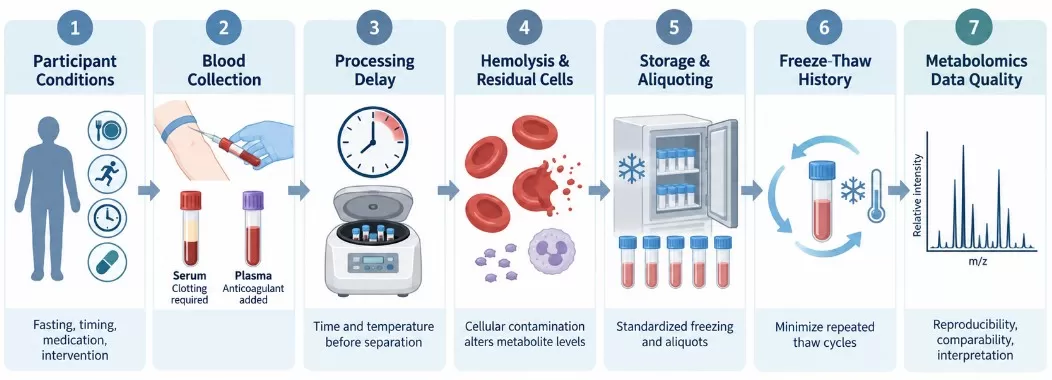
Figure 2. Key Pre-Analytical Factors Affecting Serum and Plasma Metabolomics
4.1 Fasting, Collection Timing, and Participant Conditions
Circulating metabolites respond rapidly to physiological conditions including food intake, exercise, circadian rhythms, medications, and experimental interventions. These variables should be standardized when they are potential confounders and deliberately controlled when they form part of the biological question. In biomarker or case-control studies, consistent fasting status and sampling time can reduce avoidable metabolic variability. Intervention studies should align blood collection with the relevant treatment or exposure window so that pre-collection conditions remain comparable across study groups.
4.2 Clotting Time and Sample Processing Delay
Metabolic activity continues in whole blood after collection, making the interval before serum or plasma separation an important source of variation. Delayed processing can alter metabolites through ongoing cellular consumption, release, and enzymatic reactions; serum additionally requires a controlled clotting period before centrifugation. Standardizing the time and temperature between blood collection and separation reduces these ex vivo changes. Processing conditions should remain consistent across comparison groups, particularly in multicenter or large-cohort studies (Thachil et al., 2024).
4.3 Hemolysis and Residual Blood Cells
Hemolysis releases intracellular metabolites and enzymes into serum or plasma, potentially altering the measured circulating profile. Residual erythrocytes, leukocytes, and platelets can also continue metabolic activity after incomplete separation. These effects are relevant across multiple metabolite classes and may introduce sample-specific bias unrelated to the biological question. Consistent centrifugation, appropriate handling, and assessment of visibly or analytically hemolyzed samples help limit cellular contamination and improve comparability across a metabolomics dataset (Thachil et al., 2024).
4.4 Storage, Aliquoting, and Freeze-Thaw Cycles
Storage conditions influence metabolite stability after serum or plasma has been separated. Samples should be processed and frozen under a standardized workflow, with aliquoting used to minimize repeated thawing of the same specimen. Freeze-thaw sensitivity varies among metabolites, so no single cycle threshold applies universally; unnecessary cycles should therefore be minimized and documented. For retrospective or biobank studies, storage duration, temperature, and freeze-thaw history are important metadata for evaluating whether pre-analytical differences could contribute to observed metabolic variation (Thachil et al., 2024).
5. Frequently Asked Questions About Serum vs. Plasma Metabolomics
Q1 Can Serum and Plasma Be Used in the Same Metabolomics Study?
Serum and plasma can be analyzed within the same project, but they should not be treated as interchangeable matrices. Their systematic metabolic differences can confound biological comparisons, especially if one experimental group consists mainly of serum and another of plasma. For case-control, longitudinal, or intervention studies, the same matrix and collection system should ideally be used across all comparison groups. Paired serum-plasma sampling can be appropriate when matrix-specific differences are themselves part of the research question.
Q2 Can Existing Serum Samples Be Used If Plasma Is Generally Preferred?
Yes. A well-characterized serum cohort remains suitable for metabolomics even when plasma would have been preferred for a newly designed study. Consistency across samples is usually more important than changing matrix after collection has begun. Existing serum samples are most informative when collection, processing, storage, and freeze-thaw history are comparable across study groups and when the analytical method is compatible with serum.
Q3 Which Anticoagulant Is Best for Plasma Metabolomics?
No anticoagulant is optimal for every metabolomics application. EDTA and heparin plasma are both widely used, with suitability depending on the analytical platform and metabolites of interest. Citrate requires additional caution because it introduces exogenous citrate and sample dilution, which can affect related metabolic measurements. For targeted assays, the anticoagulant supported by method-specific validation should be used; for broader profiling, a standardized EDTA or heparin workflow is generally appropriate when no relevant interference is expected.
Q4 Is Serum or Plasma Better for Lipidomics?
For newly designed studies of the circulating lipidome, plasma is generally preferred because coagulation can alter parts of the lipid profile through platelet activation and enzymatic lipid metabolism. This is particularly important for eicosanoids, oxylipins, thromboxanes, and other platelet-sensitive lipid mediators. For broader lipidomics covering structural and lipoprotein-associated lipids, both serum and plasma can be suitable, provided that the chosen matrix is analytically compatible and used consistently throughout the study.
Q5 Does a Higher Metabolite Concentration in Serum Mean Serum Is a Better Matrix?
No. Higher concentrations in serum can reflect biochemical changes occurring during coagulation, including metabolite release from activated platelets or continued cellular and enzymatic reactions. A stronger signal therefore does not necessarily provide a more accurate representation of the circulating metabolic state. Matrix quality should instead be evaluated according to biological relevance, analytical performance, and reproducibility for the metabolites and study design of interest.
Planning Your Serum or Plasma Metabolomics Study with MetwareBio
Selecting serum or plasma is one part of designing a reliable blood metabolomics study. The analytical strategy must also match the research objective, metabolites of interest, required coverage, and quantification needs. MetwareBio supports serum and plasma studies across a broad metabolomics portfolio, including untargeted metabolomics, widely targeted metabolomics, quantitative lipidomics, and targeted LC-MS/MS assays, providing flexible options from discovery profiling to focused pathway and metabolite analysis.
Our metabolomics workflows integrate optimized sample preparation, advanced mass spectrometry, structured quality control, metabolite annotation and quantification, and downstream data analysis. Multi-omics integration with proteomics, transcriptomics, microbiome, and other datasets is also available when broader biological interpretation is required.
If you are planning a serum or plasma metabolomics study, contact our team to discuss your samples, research objectives, and analytical needs and identify the most appropriate metabolomics strategy for your project.
Contact UsRead More: Blood-Matrix Metabolomics, Sample Preparation, and Statistical Analysis
These articles complement the current serum/plasma guide by detailing MetwareBio’s sample submission and anticoagulant requirements, real-world plasma metabolomics case studies, targeted and organic-acid quantification, and the statistical framework used to prioritize biologically meaningful differences.
MetwareBio’s official guide for blood and biofluid collection, recommended and minimum sample volumes, anticoagulant selection, dry-ice shipping, and submission requirements across metabolomics, proteomics, transcriptomics, and microbiome services.
A condensed reference to recommended and minimum sample sizes for metabolomics (broad targeted, untargeted, lipid, volatile), proteomics, transcriptomics, and microbiome assays, complementing the matrix-selection guidance in this blog.
Plasma metabolomics and lipidomics case study profiling metabolites and lipids in COVID-19 patients, illustrating how blood-matrix metabolomics can support biomarker discovery and disease-mechanism research.
When the metabolomics study aims to quantify defined blood biomarkers such as organic acids, this targeted LC-MS/MS panel provides absolute concentrations with calibration curves and isotope-labeled internal standards.
Overview of MetwareBio’s targeted metabolomics portfolio, including central carbon metabolism, amino acids, organic acids, bile acids, hormones, and other plasma-relevant panels, useful when matrix-specific assay performance is the deciding factor.
Practical guide to the four statistical filters most commonly used to prioritize biologically meaningful metabolite changes in serum/plasma datasets, including metabolomics and lipidomics case studies.
References
- Gonzalez-Dominguez, R., Gonzalez-Dominguez, A., Sayago, A., & Fernandez-Recamales, A. (2020). Recommendations and Best Practices for Standardizing the Pre-Analytical Processing of Blood and Urine Samples in Metabolomics. Metabolites, 10(6), 229. https://doi.org/10.3390/metabo10060229
- Hagn, G., Meier-Menches, S. M., Plessl-Walder, G., Mitra, G., Mohr, T., Preindl, K., Schlatter, A., Schmidl, D., Gerner, C., Garhofer, G., & Bileck, A. (2024). Plasma Instead of Serum Avoids Critical Confounding of Clinical Metabolomics Studies by Platelets. Journal of Proteome Research, 23(8), 3064-3075. https://doi.org/10.1021/acs.jproteome.3c00761
- Kennedy, A. D., Ford, L., Wittmann, B., Conner, J., Wulff, J., Mitchell, M., Evans, A. M., & Toal, D. R. (2021). Global biochemical analysis of plasma, serum and whole blood collected using various anticoagulant additives. PLOS ONE, 16(4), e0249797. https://doi.org/10.1371/journal.pone.0249797
- Liu, X., Hoene, M., Wang, X., Yin, P., Haring, H.-U., Xu, G., & Lehmann, R. (2018). Serum or plasma, what is the difference? Investigations to facilitate the sample material selection decision making process for metabolomics studies and beyond. Analytica Chimica Acta, 1037, 293-300. https://doi.org/10.1016/j.aca.2018.03.009
- Paglia, G., Del Greco, F. M., Sigurdsson, B. B., Rainer, J., Volani, C., Hicks, A. A., Pramstaller, P. P., & Smarason, S. V. (2018). Influence of collection tubes during quantitative targeted metabolomics studies in human blood samples. Clinica Chimica Acta, 486, 320-328. https://doi.org/10.1016/j.cca.2018.08.014
- Petrucci, G., Rizzi, A., Bellavia, S., Dentali, F., Frisullo, G., Pitocco, D., Ranalli, P., Rizzo, P. A., Scala, I., Silingardi, M., Zagarrì, E., Gussoni, G., & Rocca, B. (2024). Stability of the thromboxane B2 biomarker of low-dose aspirin pharmacodynamics in human whole blood and in long-term stored serum samples. Research and Practice in Thrombosis and Haemostasis, 8(8), 102623. https://doi.org/10.1016/j.rpth.2024.102623
- Sarmad, S., Viant, M. R., Dunn, W. B., Goodacre, R., Wilson, I. D., Chappell, K. E., Griffin, J. L., O’Donnell, V. B., Naicker, B., Lewis, M. R., Suzuki, T., & UK Consortium on Metabolic Phenotyping (MAP/UK). (2023). A proposed framework to evaluate the quality and reliability of targeted metabolomics assays from the UK Consortium on Metabolic Phenotyping (MAP/UK). Nature Protocols, 18(4), 1017–1027. https://doi.org/10.1038/s41596-022-00801-8
- Thachil, A., Wang, L., Mandal, R., Wishart, D., & Blydt-Hansen, T. (2024). An Overview of Pre-Analytical Factors Impacting Metabolomics Analyses of Blood Samples. Metabolites, 14(9), 474. https://doi.org/10.3390/metabo14090474