Targeted and untargeted metabolomics are two core strategies for mass spectrometry-based metabolic profiling, but they are designed for different research questions. Untargeted metabolomics is used when the relevant metabolic changes are not yet known and broad profiling is needed to discover patterns, pathways, or candidate biomarkers. Targeted metabolomics starts with a predefined analyte list and focuses measurement on those compounds with the sensitivity, selectivity, and quantitative performance required by the study. The choice depends on prior knowledge, the quantitative endpoint, sample constraints, cohort size, and study stage; in some biomarker studies, the two approaches are used sequentially, with untargeted discovery followed by targeted verification. This article compares the analytical logic, quantification strategies, study-design considerations, and common applications of targeted and untargeted metabolomics, and explains when each approach—or a staged combination of both—is the better fit.
1. Understanding Targeted and Untargeted Metabolomics
Targeted and untargeted metabolomics differ first in what is defined before data acquisition and what kind of output the study is expected to produce. The two sections below define each strategy on its own before comparing the two approaches.
1.1 What Is Untargeted Metabolomics?
Untargeted metabolomics is a discovery-oriented approach that profiles a broad range of detectable metabolic features without requiring a predefined analyte list. Its purpose is to reveal metabolic changes that may not be anticipated before the experiment, making it particularly useful for hypothesis generation, phenotype characterization, pathway exploration, and early biomarker discovery. In LC-MS workflows, high-resolution full-scan acquisition is commonly used to capture signals across a wide chemical space. The initial data consist of features—typically combinations of m/z, retention time, and signal intensity—rather than a fully identified list of metabolites. These features are detected, aligned, quality-controlled, and compared across samples before the most informative signals are prioritized for annotation or identification using MS/MS evidence, retention information, reference libraries, or authentic standards where available (Alseekh et al., 2021; Mosley et al., 2024).
Because untargeted metabolomics prioritizes breadth, not every detected feature can be identified or quantified with the same confidence. Coverage depends on extraction, chromatography, ionization, instrument range, dynamic range, and matrix effects; compounds that are poorly extracted, weakly ionized, or masked by background may be missed. Quantitative comparisons are therefore usually based on relative signal abundance rather than calibrated concentrations. Untargeted metabolomics is best used to characterize patterns of metabolic change and generate candidates for follow-up, not to claim complete measurement of the metabolome or definitive concentrations for every detected feature (Alseekh et al., 2021; Mosley et al., 2024).
1.2 What Is Targeted Metabolomics?
Targeted metabolomics is a hypothesis-driven approach that measures a predefined set of metabolites using an assay optimized for those analytes. It is most appropriate when the compounds of interest are already known and the study requires focused, reproducible measurement rather than broad discovery. In a common triple-quadrupole LC-MS/MS workflow, the instrument monitors selected precursor-to-product ion transitions for each analyte, while sample preparation, chromatography, and acquisition conditions can be tailored to improve selectivity and sensitivity. This makes targeted metabolomics well suited to known pathways, pharmacodynamic markers, low-abundance analytes, predefined biomarker candidates, and large cohorts in which the same compounds must be measured consistently (Beger et al., 2024; Sarmad et al., 2023).
Targeted metabolomics does not automatically mean absolute quantification. Some assays report relative responses, whereas others are calibrated to report concentrations. Absolute concentration requires appropriate reference standards, a calibration model, and method performance demonstrated in the relevant matrix; isotope-labeled internal standards are often used when greater quantitative accuracy and robustness are needed. Terminology also varies across the literature, with some frameworks reserving ‘targeted’ for calibrated assays and classifying predefined but non-calibrated measurements as semi-targeted. For this reason, the quantitative endpoint—relative response or calibrated concentration—should be stated explicitly (Lu et al., 2008; Beger et al., 2024). The main advantage of targeted metabolomics is that the assay can be designed around the sensitivity, selectivity, working range, and quantitative rigor required for a defined analyte set (Alseekh et al., 2021; Sarmad et al., 2023).
Figure 1 provides a published example of how these different objectives translate into LC-MS workflows. The targeted branch in that figure represents a calibrated implementation; targeted assays can also be designed for other quantitative endpoints.
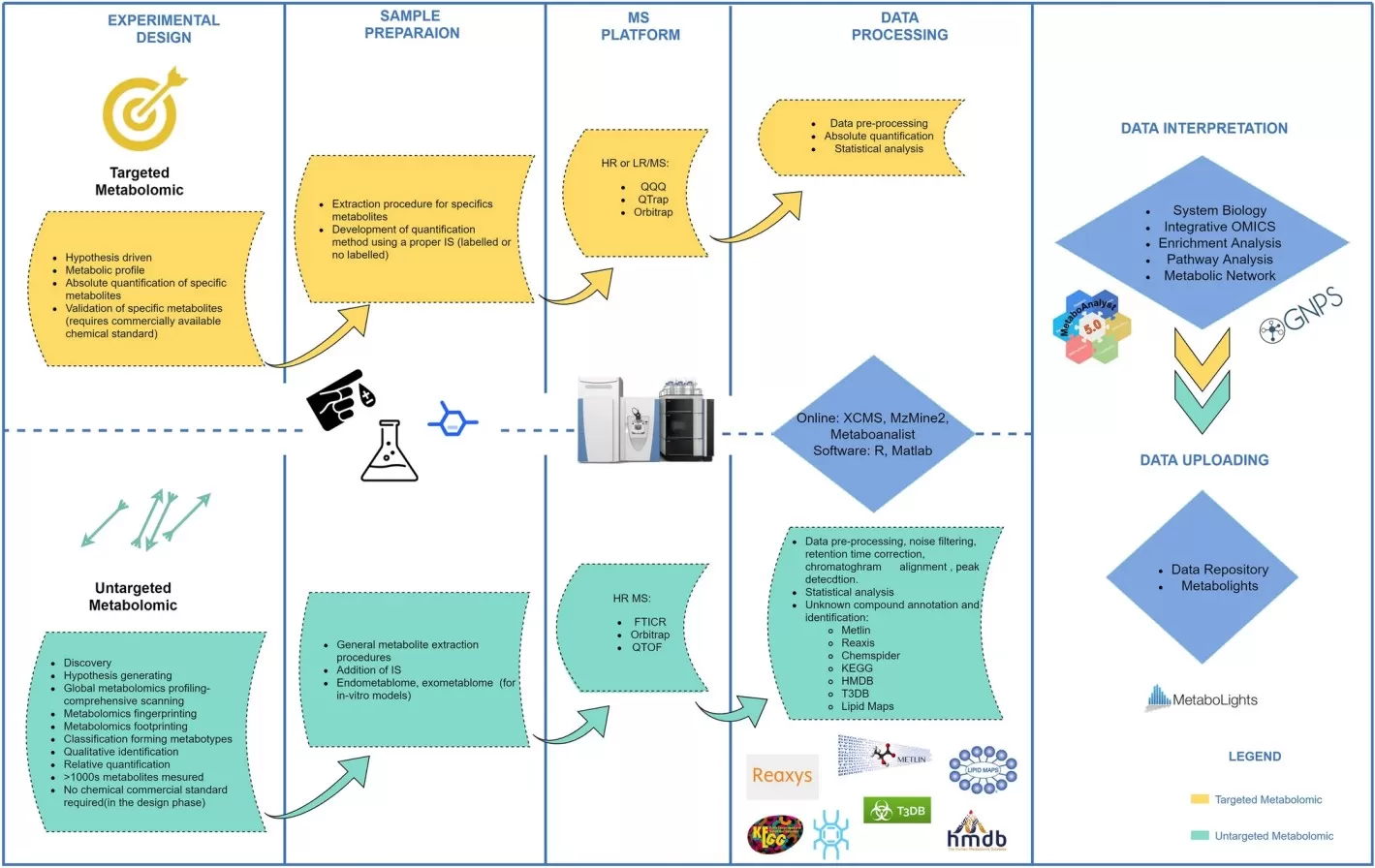
Figure 1. Representative LC-MS Workflows for Targeted and Untargeted Metabolomics. Reproduced without modification from Reveglia et al. (2021), Figure 2, Metabolomics, under the Creative Commons Attribution 4.0 International License (CC BY 4.0).
2. Targeted vs Untargeted Metabolomics: Key Analytical Differences
Targeted and untargeted metabolomics differ not only in analytical breadth but also in identification confidence, quantification strategy, data-processing burden, and where method-development effort is concentrated. Untargeted workflows generate a large feature space, so much of the work comes after acquisition in filtering, annotation, and interpretation. Targeted assays deliberately restrict that space so acquisition and quantification can be optimized for selected compounds. These differences influence the type of evidence each strategy can provide and the amount of work required before and after data acquisition. Table 1 summarizes the distinctions most relevant to study planning (Beger et al., 2024).
The cost profile is also different. An untargeted project may place more effort in high-resolution acquisition, data processing, annotation, and downstream verification, whereas a targeted project may require more work up front for standards, calibration, and assay development. Either approach can become expensive when the study is large or technically demanding. Budget is therefore best treated as a constraint on study design and staging, not as a rule for choosing one strategy over the other.
Table 1. Targeted vs Untargeted Metabolomics: Practical Differences for Study Design
| Dimension | Untargeted Metabolomics | Targeted Metabolomics |
|---|---|---|
| Primary analytical question | What metabolic changes are present across a broad, incompletely predefined chemical space? | How do selected, predefined metabolites change, and by how much? |
| Prior knowledge | Low to moderate; relevant analytes may be unknown at study start | High; analytes or panels are predefined |
| Metabolite coverage | Broad, but dependent on extraction, separation, ionization, detection, and matrix | Restricted to selected targets or panels |
| Typical acquisition | Broad/full-scan HRMS-oriented workflows, often with DDA or DIA MS/MS | Optimized analyte-specific acquisition, commonly MRM/SRM or other targeted modes |
| Primary output | Feature-level profile, relative abundance patterns, and prioritized annotations/identifications | Focused quantitative results for predefined analytes; calibrated concentrations when the assay supports them |
| Identification strategy | Many features with variable identification confidence; prioritized candidates may need additional confirmation | Reference-supported identity for predefined analytes, often using standards plus retention/MS information |
| Quantification | Usually relative or semi-quantitative across samples | Relative responses or calibrated concentrations, depending on assay design; calibrated concentrations require standards, calibration, and validation |
| Sensitivity/selectivity for predefined low-abundance analytes | Can be constrained by broad acquisition, matrix background, and dynamic range | Often improved after analyte-specific optimization |
| Data-processing burden | High: feature extraction, QC, alignment, normalization, statistics, annotation, and multiple testing | More focused downstream processing, but more assay development and validation before acquisition |
| Major limitation | Identification and quantitative certainty across a broad feature space | Limited discovery breadth outside predefined targets |
| Major cost drivers | HRMS acquisition, broad processing, annotation, and follow-up verification | Standards, assay development, calibration, validation, and panel complexity |
Where Does Widely Targeted Metabolomics Fit? Widely targeted and other hybrid approaches sit between broad discovery and narrowly predefined assays, but the term does not describe one standardized method. A workflow may use high-resolution data to expand or refine the metabolite list and then apply targeted-style measurement to compounds that can be monitored reliably. This can extend coverage beyond a conventional targeted panel while retaining analyte-specific acquisition for the monitored compounds. Because implementations vary, readers should check what was predefined, how identity was established, and whether the output is relative or calibrated (Amer et al., 2023; Beger et al., 2024).
3. How to Choose Targeted or Untargeted Metabolomics
Choosing between targeted and untargeted metabolomics becomes easier when four questions are answered in order: What are you trying to learn? What kind of quantitative result do you need? Can the samples and analytes support that measurement? And where is the project in the research cycle? These questions keep the research objective—not familiarity with a particular platform—at the center of method selection.
3.1 What Are You Trying to Learn?
A useful first test is to ask whether missing an unexpected metabolite would weaken the study. If the answer is yes, the project needs discovery breadth and untargeted metabolomics is usually the better starting point. A disease-mechanism study with little prior metabolic information, for example, benefits from seeing changes outside the pathways already suspected. By contrast, if the hypothesis already names the compounds that matter—specific bile acids, amino acids, hormones, or pathway intermediates—focused measurement of those compounds is usually more informative than expanding the experiment to a much broader feature set. Targeted metabolomics is then the more direct choice. Projects between these two extremes can use a broader pathway-focused panel or a staged design when the known biology is informative but not yet complete.
3.2 What Kind of Quantitative Result Do You Need?
The next decision is what the final number needs to mean. For discovery, a reproducible relative change may be enough to rank candidates or compare groups. A study that must report concentration in units such as ng/mL or µM, define a working range, or support a concentration threshold needs a calibrated assay with appropriate standards and validation. Large confirmation cohorts also often benefit from targeted measurement because the analyte list is fixed, even when absolute concentration is not required. ‘Targeted’ and ‘absolute’ should therefore not be treated as synonyms; the endpoint should be specified first and the assay built to match it (Alseekh et al., 2021; Lu et al., 2008; Sarmad et al., 2023).
3.3 Will the Samples and Analytes Support the Plan?
A strategy that looks right on paper can still fail if the sample matrix or analyte chemistry is unfavorable. Matrix effects can suppress or distort ion signals, while unstable or poorly extracted metabolites may be lost before they reach the instrument. Low-abundance analytes can also be difficult to distinguish from background in a broad acquisition. When these issues affect compounds central to the hypothesis, a targeted assay can use dedicated extraction, chromatography, internal standards, or analyte-specific transitions to improve measurement. Sample amount, storage history, matrix effects, and the feasibility of appropriate QC materials should therefore be reviewed alongside the analyte list before the workflow is locked (Alseekh et al., 2021; Mosley et al., 2024).
Technical feasibility is only one side of the decision. A well-optimized targeted panel is still uninformative if the predefined list omits the biology that actually changes. When the mechanism is uncertain, preserving discovery breadth can be more useful than narrowing the assay too early. Sample and analyte feasibility should refine the scientific plan, not replace the biological question.
3.4 Where Is the Project in the Research Cycle?
Study stage often decides how breadth and depth should be allocated. A pilot study may use untargeted profiling on a representative subset to discover reproducible candidates. Once the candidate list is narrowed, a larger replication cohort can be measured with a targeted panel that has prespecified endpoints. This split is especially useful when sample volume, instrument time, or budget cannot support broad profiling and targeted follow-up at full scale. Planning the stages together also prevents a common problem: spending the entire sample or budget on discovery and leaving no room to test whether the result holds up.
4. From Untargeted Discovery to Targeted Verification
Some biomarker projects are not well served by choosing one approach once and keeping it for the entire study. The two stages can do different jobs: untargeted metabolomics narrows a broad search space to a defensible candidate set, and targeted metabolomics then measures those candidates under more controlled analytical conditions. This staged design is useful when both discovery and quantitative follow-up are needed, but it is not a mandatory recipe for every project.
4.1 Candidate Prioritization Following Untargeted Metabolomics Discovery
Discovery should end with a smaller, defensible candidate list—not a transfer of every statistically significant feature into a targeted assay. Features that move forward need stable QC behavior, acceptable missingness, reproducibility across samples, and enough signal in the matrix intended for follow-up (Mosley et al., 2024). Chemical identity also matters. A large effect attached to an uncertain annotation can be a poor candidate for assay development if the compound cannot be confirmed or measured selectively.
Biological relevance provides the second filter. Effect size, pathway context, consistency with the phenotype, and plausibility of the proposed mechanism help distinguish findings worth testing from signals that are merely statistically interesting. These filters do not prove that a candidate is a biomarker; they reduce the discovery set to compounds for which targeted verification is technically and biologically justified (Alseekh et al., 2021; Li et al., 2024).
4.2 Targeted Quantitative Verification of Prioritized Metabolites
Moving a candidate into a targeted assay is an assay-development step, not a simple rerun of the same peak. Authentic standards can support identity confirmation by matching retention time and mass-spectral or transition behavior, while MRM/SRM transitions and chromatography are optimized to separate the analyte from interferences. If concentration is required, calibration curves and appropriate internal standards are added. The assay is then checked for performance over the range in which it will be used, including precision, selectivity, recovery, stability, carryover, and quantifiable range. These checks determine whether the candidate can support the conclusion expected at the next study stage (Li et al., 2024; Sarmad et al., 2023).
4.3 Independent Validation Beyond Targeted Analytical Verification
Even a well-performing targeted assay answers only the analytical part of the question. Re-measuring a candidate shows that the signal can be quantified reliably; it does not establish that the biological association will reproduce in new samples or that the marker has clinical utility. Those claims require evidence appropriate to the intended use, such as an independent cohort, biological replication, confounder adjustment, functional experiments, or, for clinical biomarkers, prespecified performance metrics. Keeping these evidence layers separate prevents ‘targeted verification’ from being mistaken for final biomarker validation (Li et al., 2024).
Long et al. (2021) provide a useful example of this staging. Their multicenter study used non-targeted LC-HRMS in discovery and test cohorts, then moved selected biomarkers into targeted triple-quadrupole measurement in the validation phase (Figure 2). The design illustrates how discovery and quantitative follow-up can be separated; additional external validation may still be needed depending on the claim.
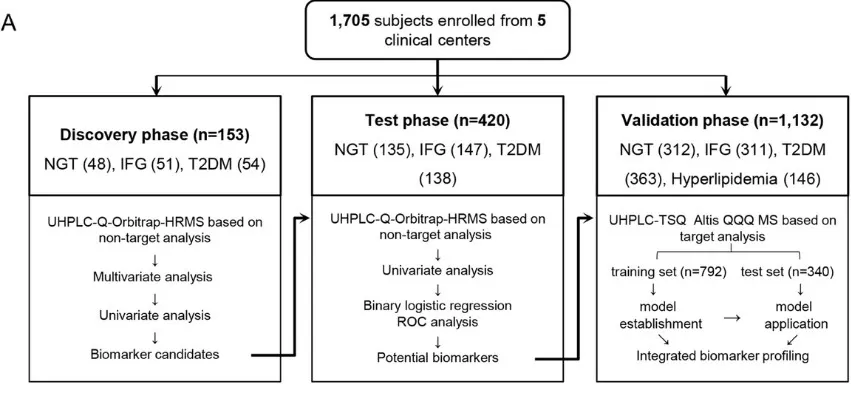
Figure 2. Example of a Staged Untargeted-to-Targeted Biomarker Workflow. Cropped from Long et al. (2021), Figure 1A, Clinical and Translational Medicine, under the Creative Commons Attribution 4.0 International License (CC BY 4.0). Only the study-design panel is shown; the scientific content was not altered.
5. Targeted or Untargeted Metabolomics for Common Research Scenarios
Choosing between targeted and untargeted metabolomics is often clearer when the research question is placed in a concrete study context. Table 2 summarizes practical starting points for common research scenarios rather than fixed rules; sample feasibility, quantitative requirements, and the planned next step can still change the final design.
Table 2. Choosing Targeted or Untargeted Metabolomics for Common Research Scenarios
| Research scenario | Starting strategy | Why | Typical next step |
|---|---|---|---|
| Novel biomarker discovery | Untargeted | Candidates are not predefined | Prioritize candidates, then use targeted quantitative verification if needed |
| Disease mechanism with unclear metabolic remodeling | Untargeted | Broad pathway context and unexpected changes matter | Prioritize pathways and candidate metabolites for follow-up |
| Known pathway or predefined metabolite hypothesis | Targeted | Analytes are already defined | Test the hypothesis with prespecified quantitative endpoints |
| Low-abundance predefined metabolites | Targeted | Analyte-specific sensitivity/selectivity may be required | Replication or functional follow-up |
| Drug response with unknown off-target metabolic effects | Untargeted | Unexpected metabolic responses are part of the question | Targeted follow-up of prioritized findings |
| Large cohort with a fixed metabolite panel | Targeted | Focused, reproducible measurement is the main goal | Association, replication, or validation analysis |
| Plant stress or phenotype with poorly characterized metabolic changes | Untargeted | Response pathways and candidates are not predefined | Targeted follow-up of prioritized metabolites |
When the metabolites that matter are still uncertain, broader discovery is usually the better starting point. When the analyte list and measurement goal are already defined, targeted analysis is usually more efficient. Study stage and sample constraints can still change that initial choice.
6. Common Misconceptions About Targeted and Untargeted Metabolomics
Misconception 1: ‘Untargeted metabolomics measures the entire metabolome.’ It does not. Untargeted LC-MS samples a broad, method-dependent portion of the metabolome, and coverage changes with extraction, chromatography, ionization, instrument range, matrix, and data processing. ‘Broad’ or ‘global profiling’ should describe the intent, not a claim of complete metabolome coverage (Alseekh et al., 2021).
Misconception 2: ‘Targeted metabolomics always provides absolute quantification and is always more accurate.’ Neither statement is automatic. Absolute concentration requires suitable standards, calibration, and an assay that performs adequately in the relevant matrix. Targeted optimization can improve sensitivity, selectivity, precision, and quantitative control for predefined analytes, but the size of that advantage depends on the method and the analyte (Beger et al., 2024; Sarmad et al., 2023).
Misconception 3: ‘Untargeted metabolomics is only qualitative.’ Untargeted data are routinely used to compare relative signal abundance across samples and groups. Those measurements can support robust discovery and ranking, but they are not equivalent to concentration values from a calibrated assay (Alseekh et al., 2021; Beger et al., 2024).
Misconception 4: ‘A significant untargeted feature is already a validated biomarker.’ Statistical significance is only the beginning. The feature still needs a credible identity, analytical reproducibility, targeted verification when appropriate, and independent evidence that the association generalizes. Clinical claims add another layer of performance testing beyond analytical confirmation (Li et al., 2024).
7. MetwareBio Targeted, Untargeted, and Widely Targeted Metabolomics Services
The same study-design principles can be used to select among MetwareBio's targeted, untargeted, and widely targeted metabolomics services. High-resolution LC-MS/MS untargeted metabolomics is suited to projects that need broad profiling, metabolite annotation, pathway exploration, and candidate generation, particularly when the relevant metabolites are not fully defined at the start.
For predefined quantitative questions, MetwareBio’s targeted metabolomics workflows use chemical standards and calibration curves to support absolute quantification of selected analytes when that endpoint is required. Widely targeted metabolomics serves a different purpose: high-resolution data are used for discovery and annotation, followed by QQQ-MRM measurement across the study samples, providing broad coverage with targeted-style relative quantification. The best fit depends on whether the project needs discovery breadth, calibrated concentration measurements, or a staged combination of the two.
If you are planning a metabolomics project and need support selecting the most appropriate analytical strategy, contact MetwareBio to discuss your study requirements.
Contact UsRead More: Metabolomics Strategy Selection
These articles provide additional context on metabolomics strategy selection, from the analytical differences between targeted and untargeted approaches to practical workflow design and service options.
A direct comparison of all three metabolomics strategies, covering acquisition modes, quantification approaches, and when each method is most appropriate for different research questions.
A step-by-step walkthrough of untargeted metabolomics workflows, from sample preparation through feature detection, annotation, and biological interpretation.
Overview of MetwareBio untargeted metabolomics platform, including high-resolution LC-MS/MS acquisition, metabolite annotation, and pathway analysis capabilities.
Details of MetwareBio targeted metabolomics services, including analyte-specific MRM acquisition, calibration curves, and absolute quantification for predefined metabolite panels.
Explains the widely targeted metabolomics approach that combines high-resolution discovery with targeted-style MRM quantification across study samples for broad coverage.
A concise comparison of targeted and untargeted metabolomics characteristics, including sensitivity, coverage, and data processing requirements for study planning.
References
- Alseekh, S., Aharoni, A., Brotman, Y., et al. (2021). Mass spectrometry-based metabolomics: A guide for annotation, quantification and best reporting practices. Nature Methods, 18, 747–756.
- Amer, B., Deshpande, R. R., & Bird, S. S. (2023). Simultaneous Quantitation and Discovery (SQUAD) Analysis: Combining the best of targeted and untargeted mass spectrometry-based metabolomics. Metabolites, 13(5), 648.
- Beger, R. D., Goodacre, R., Jones, C. M., et al. (2024). Analysis types and quantification methods applied in UHPLC-MS metabolomics research: A tutorial. Metabolomics, 20(5), 95.
- Li, S., Looby, N., Chandran, V., & Kulasingam, V. (2024). Challenges in the metabolomics-based biomarker validation pipeline. Metabolites, 14(4), 200.
- Long, J., Yang, H., Yang, Z., et al. (2021). Integrated biomarker profiling of the metabolome associated with impaired fasting glucose and type 2 diabetes mellitus in large-scale Chinese patients. Clinical and Translational Medicine, 11(6), e432.
- Lu, W., Bennett, B. D., & Rabinowitz, J. D. (2008). Analytical strategies for LC-MS-based targeted metabolomics. Journal of Chromatography B, 871(2), 236–242.
- Mosley, J. D., Schock, T. B., Beecher, C. W., et al. (2024). Establishing a framework for best practices for quality assurance and quality control in untargeted metabolomics. Metabolomics, 20, 20.
- Reveglia, P., Paolillo, C., Ferretti, G., et al. (2021). Challenges in LC-MS-based metabolomics for Alzheimer’s disease early detection: targeted approaches versus untargeted approaches. Metabolomics, 17, 78.
- Sarmad, S., Viant, M. R., Dunn, W. B., et al. (2023). A proposed framework to evaluate the quality and reliability of targeted metabolomics assays from the UK Consortium on Metabolic Phenotyping (MAP/UK). Nature Protocols, 18, 1017–1027.