Gamma-aminobutyric acid (GABA) is best known as a major inhibitory neurotransmitter in the mammalian central nervous system, where it modulates neuronal excitability and excitation-inhibition balance. This familiar definition captures only part of its biological identity. GABA is also a four-carbon, non-proteinogenic amino acid that connects glutamate metabolism with mitochondrial carbon flow through the GABA shunt. Its synthesis, catabolism, transport, and receptor signaling are relevant to neuroscience, pancreatic and immune metabolism, cancer biology, plant stress responses, microbial metabolism, and gut-brain axis research. These diverse roles make GABA an informative analyte for targeted LC-MS/MS, amino acid metabolomics, and multi-omics studies. This article examines GABA metabolism, receptor signaling, cross-system biological functions, and analytical strategies for context-aware interpretation.
1. What Is GABA? From Non-Protein Amino Acid to Bioactive Metabolite
GABA occupies a distinctive position at the interface of metabolism and cell signaling. Although it is not incorporated into proteins, it can function as a neurotransmitter, metabolic intermediate, extracellular signal, and stress-responsive metabolite across different biological systems.The biological meaning of a GABA measurement depends on the organism, tissue, cell type, and surrounding pathway.
GABA is a small, highly polar molecule with the molecular formula C4H9NO2. Unlike alpha-amino acids used in protein synthesis, its amino group is located on the gamma carbon relative to the carboxyl group, which defines GABA as a non-proteinogenic amino acid. Its small size and high polarity also limit retention in conventional reversed-phase liquid chromatography, so reliable LC-MS/MS analysis often requires method-specific sample preparation and chromatographic conditions.
GABA is formed primarily through the decarboxylation of glutamate. In the nervous system, this reaction produces a major inhibitory neurotransmitter. In peripheral tissues, immune cells, plants, and microorganisms, GABA can participate in local signaling, carbon and nitrogen balance, stress adaptation, or metabolic exchange. GABA should therefore be interpreted as a context-dependent metabolite rather than as a nervous-system-specific marker (Braga et al., 2024; Guo et al., 2023).
2. GABA Metabolism: Biosynthesis, Catabolism, and the GABA Shunt
The GABA shunt provides the central metabolic framework for interpreting GABA beyond neurotransmission. It links glutamate-derived amino acid metabolism to succinate formation and the tricarboxylic acid (TCA) cycle, allowing changes in GABA abundance to reflect both signaling biology and mitochondrial carbon metabolism.
2.1 GABA Biosynthesis from Glutamate
GABA is synthesized from glutamate by glutamate decarboxylase (GAD), a pyridoxal 5-phosphate-dependent enzyme. In mammals, GAD1 and GAD2 encode the major isoforms GAD67 and GAD65, respectively. Their cellular distribution and regulation differ, but both remove the alpha-carboxyl group from glutamate to generate GABA (Braga et al., 2024; Tang et al., 2021). This reaction directly links the excitatory transmitter glutamate with the inhibitory GABA system. Paired measurement of glutamate and GABA can therefore provide more pathway-level information than either analyte alone, although concentration ratios should not be treated as direct measures of neural excitation-inhibition balance.
The same biochemical route operates in several non-neural systems. Pancreatic beta cells contain a substantial GABA pool (Hagan et al., 2022), activated T cells can produce and catabolize GABA (Kang et al., 2022), plants rapidly accumulate GABA under stress (Guo et al., 2023), and microorganisms may use glutamate decarboxylation for acid resistance and metabolic exchange (Braga et al., 2024).
2.2 GABA Catabolism, Succinate Formation, and TCA Cycle Entry
GABA catabolism begins with 4-aminobutyrate aminotransferase, commonly called GABA transaminase and encoded by ABAT. This enzyme transfers the amino group from GABA to alpha-ketoglutarate, producing succinic semialdehyde while regenerating glutamate. Succinic semialdehyde dehydrogenase, encoded by ALDH5A1, then oxidizes succinic semialdehyde to succinate, which can enter the TCA cycle.
This pathway explains why GABA should rarely be interpreted as an isolated analyte. Increased GABA may reflect enhanced synthesis, reduced degradation, altered transport, extracellular release, or changes in downstream mitochondrial utilization. In immune cells, ABAT-dependent GABA catabolism supports mitochondrial carbon allocation, illustrating how the GABA shunt can influence cell fate through both metabolic and receptor-mediated mechanisms (Kang et al., 2022). Joint measurement of glutamate, alpha-ketoglutarate, succinate, related TCA-cycle metabolites, and succinic semialdehyde where analytically feasible can strengthen pathway interpretation. Figure 1 summarizes the neuron-glia metabolic exchange involved in GABA recycling.
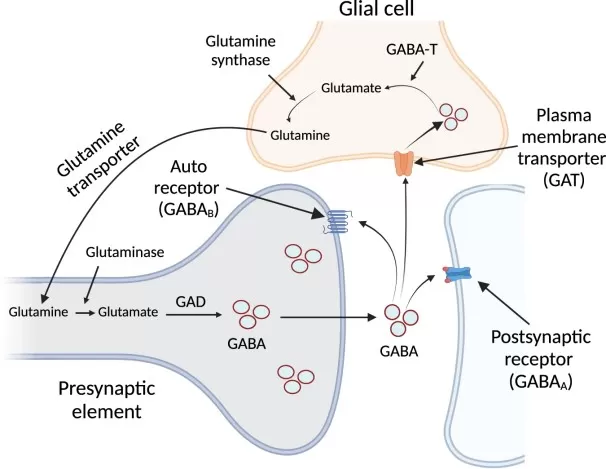
Figure 1. GABA synthesis, degradation, and metabolic exchange between neurons and glial cells. Image reproduced from Figure 2 in Braga et al. (2024), npj Science of Food, 8, 16, licensed under the Creative Commons Attribution 4.0 International License (CC BY 4.0).
3. GABA Receptor Signaling and Neural Network Regulation
In neural circuits, GABA signaling is not a uniform inhibitory process. Receptor subtype, cellular chloride gradients, synaptic or extrasynaptic location, extracellular GABA concentration, transporter activity, and developmental stage all shape the physiological response.
3.1 GABA-A and GABA-B Receptor Signaling
GABA-A receptors are ligand-gated ion channels that mediate most rapid inhibitory neurotransmission in the mature central nervous system. Receptor opening changes chloride conductance and typically lowers the probability of action-potential generation. GABA-B receptors are G protein-coupled receptors that produce slower, longer-lasting effects by regulating potassium channels, calcium channels, adenylyl cyclase, and downstream signaling networks. Together, these receptor classes allow GABA to regulate neuronal activity across different spatial and temporal scales (Tang et al., 2021).
Receptor-mediated effects remain context dependent. During development, or in cells with altered chloride homeostasis, GABA-A receptor activation may not produce classical hyperpolarizing inhibition. GABA concentration alone therefore cannot fully describe GABAergic function; receptor composition, transporter expression, chloride regulation, and circuit state must also be considered.
3.2 Phasic and Tonic Inhibition in Excitation-Inhibition Balance
Phasic inhibition is generated by brief, high-concentration GABA transients at synapses, whereas tonic inhibition reflects persistent activation of extrasynaptic receptors by lower ambient GABA concentrations. GABA tone is shaped by release, diffusion, transporter-mediated uptake, metabolic clearance, and non-neuronal contributions. Tonic signaling can influence network gain, oscillatory behavior, sensory processing, learning, and cognition over timescales that differ from fast synaptic inhibition (Koh et al., 2023).
Excitation-inhibition balance is a systems-level property rather than a simple ratio of glutamate and GABA concentrations. Metabolomics can quantify relevant metabolites, but functional conclusions are stronger when these data are integrated with receptor-subunit expression, transporter abundance, electrophysiology, imaging, or cell-type-resolved measurements.
3.3 Astrocytic and Extrasynaptic Control of GABA Signaling
GABA signaling also extends beyond conventional neuron-to-neuron synapses. Astrocytes regulate extracellular GABA through uptake, metabolism, and context-dependent release, thereby contributing to tonic inhibition and local network activity. Extrasynaptic receptors, ambient GABA pools, and transporter-mediated clearance further expand GABA signaling beyond brief synaptic events. These mechanisms show why tissue-level GABA abundance cannot be interpreted independently of cellular source, receptor location, and transport activity (Koh et al., 2023).
4. GABA in Disease and Cross-System Biological Research
GABA is investigated in neurological, metabolic, immune, cancer, plant, and microbiome research. Across these fields, it is most informative when interpreted as a pathway-level readout linked to synthesis, catabolism, transport, and receptor context, rather than as a universal diagnostic marker or stand-alone measure of disease severity.
4.1 GABAergic Signaling in Neurological Research
Altered GABAergic signaling has been studied extensively in neurodevelopmental disorders and in broader research on neuronal excitability, cognition, and brain network function. Relevant mechanisms include changes in interneuron development, receptor-subunit composition, chloride homeostasis, tonic inhibition, transporter activity, and regional GABA availability. Developmental timing is particularly important because GABA signaling changes across maturation and interacts with activity-dependent circuit development (Tang et al., 2021; Koh et al., 2023).
GABA measurements should therefore be interpreted cautiously. Brain tissue, cerebrospinal fluid, plasma, and in vivo magnetic resonance spectroscopy capture different compartments or metabolite pools. Peripheral GABA cannot be assumed to represent synaptic GABA directly; the study design should define which biological question each sample type or measurement modality can answer.
4.2 GABA in Pancreatic, Immune, and Cancer Biology
Outside the central nervous system, GABA is increasingly studied in pancreatic islet biology and immune metabolism. Pancreatic beta cells synthesize and release GABA, and islet studies have examined its relationships with cell communication, insulin-related biology, and immune interactions. In T cells, ABAT can direct GABA-derived carbon into mitochondrial metabolism, while extracellular GABA can influence receptor-dependent immune responses (Hagan et al., 2022; Kang et al., 2022).
Cancer studies further illustrate the context dependence of GABA biology. In one experimental model, aberrant GAD1 expression enabled tumor cells to synthesize GABA from glutamate, activate GABA-B receptor signaling, stabilize beta-catenin, and alter antitumor immune-cell infiltration (Huang et al., 2022). Separately, B-cell-derived GABA promoted anti-inflammatory macrophage differentiation in mouse tumor models (Zhang et al., 2021). These findings support investigation of GABA metabolism and signaling in tumor biology, but they do not imply a uniform effect across cancer types, disease stages, or tissues. Figure 2 summarizes major metabolic and signaling components of the pancreatic beta-cell GABA system.
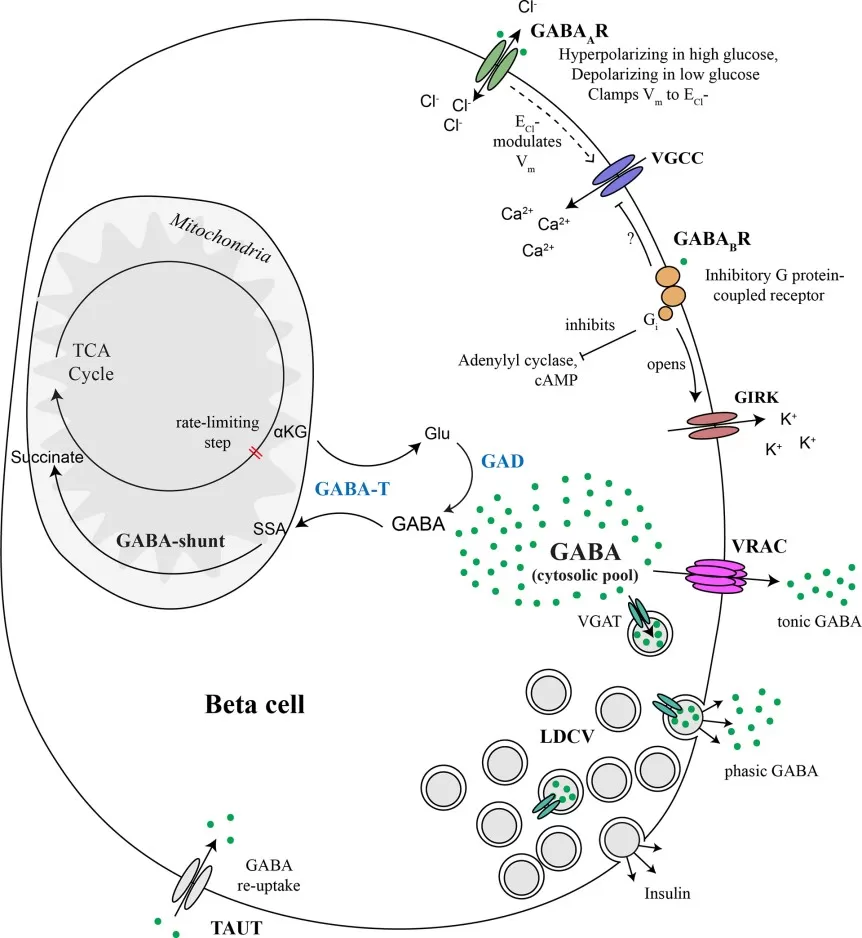
Figure 2. Major metabolic and signaling components of the pancreatic beta-cell GABA system. Image reproduced from Figure 5 in Hagan et al. (2022), Frontiers in Endocrinology, 13, 972115, licensed under the Creative Commons Attribution 4.0 International License (CC BY 4.0).
4.3 GABA in Plant Stress Biology
In plants, GABA can accumulate rapidly during drought, salinity, temperature stress, hypoxia, mechanical damage, or pathogen challenge. Proposed functions include regulation of carbon and nitrogen balance, pH, redox homeostasis, ion transport, hormone cross-talk, and stress signaling. Because these responses vary by species, tissue, developmental stage, and stress duration, plant GABA data are most informative when combined with organic acids, amino acids, redox-related metabolites, and gene-expression measurements (Guo et al., 2023). Figure 3 illustrates how GABA connects plant carbon and nitrogen metabolism.
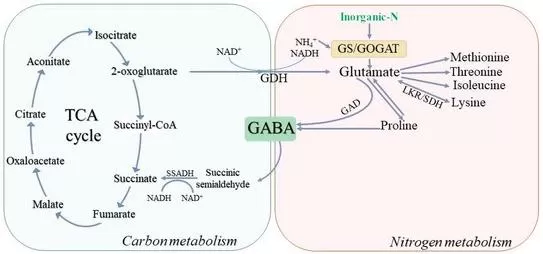
Figure 3. GABA coordination of carbon and nitrogen metabolism in plants. Image reproduced from Figure 4 in Guo et al. (2023), Metabolites, 13(6), 741, licensed under the Creative Commons Attribution 4.0 International License (CC BY 4.0).
4.4 Microbial GABA and Gut-Brain Axis Research
Microbial GABA production adds a distinct layer of interpretation. Several gut- and food-associated microorganisms contain glutamate decarboxylase systems, and microbial GABA has been investigated as a candidate mediator of gut-brain communication. Current evidence supports a biologically plausible connection among microbial composition, GABA production capacity, intestinal signaling, and host metabolism, while direct causal links to specific human neurological outcomes remain under investigation (Braga et al., 2024). Figure 4 presents the proposed links among dietary factors, GABA-producing gut microbiota, microbial metabolites, and brain function.
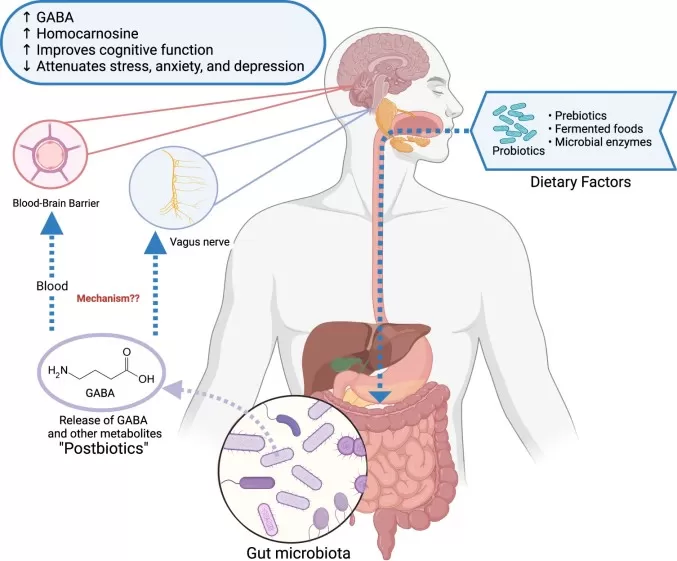
Figure 4. Proposed links among dietary factors, GABA-producing gut microbiota, microbial metabolites, and brain function. Image reproduced from Figure 1 in Braga et al. (2024), npj Science of Food, 8, 16, licensed under the Creative Commons Attribution 4.0 International License (CC BY 4.0).
4.5 Interpreting GABA Across Sample Types and Biological Contexts
Sample origin is a major determinant of biological meaning. The same direction of change can reflect different mechanisms in brain tissue, plasma, feces, cultured cells, or plant organs. Interpretation should therefore be anchored to the measured compartment, related metabolites, experimental perturbation, and expected timescale of response.
Table 1. GABA-Related Readouts and Interpretation Across Research Contexts
| Research area | Key readouts | Interpretive focus |
|---|---|---|
| Neuroscience | GABA, glutamate, glutamine; receptor/transport markers | GABA pathway status and excitation-inhibition context |
| Metabolic disease | GABA, succinate, alpha-ketoglutarate | Amino acid and mitochondrial remodeling |
| Pancreatic and islet biology | GABA, glutamate, TCA metabolites | Local GABA production, catabolism, and tissue response |
| Immune and cancer research | GABA, GAD1/GAD2, ABAT, receptors | Metabolite signaling and immune/tumor context |
| Plant stress | GABA, carbon/nitrogen and redox metabolites | Stress adaptation and metabolic homeostasis |
| Gut microbiota | Fecal/culture GABA, microbial GAD genes | Microbial production and host-microbe communication |
5. GABA Metabolomics: Targeted LC-MS/MS and Multi-Omics Strategies
Analytical strategy should be selected according to the research question. Targeted LC-MS/MS is well suited to sensitive, reproducible quantification of predefined analytes, whereas untargeted metabolomics provides broader coverage of pathway remodeling. Multi-omics integration becomes valuable when GABA changes need to be connected to enzymes, transporters, receptors, cell states, or phenotype.
5.1 Targeted LC-MS/MS Quantification of GABA and Pathway Metabolites
Targeted LC-MS/MS is generally preferred when a study requires absolute quantification or reproducible measurement of predefined GABA-related analytes across a sample set. A robust assay should include authentic calibration standards, stable-isotope internal standards where available, matrix-appropriate calibration or validation, pooled quality-control samples, blank monitoring, and predefined acceptance criteria for precision, recovery, carryover, and batch stability.
Because GABA is small and highly polar, analytical performance depends strongly on sample preparation and chromatographic retention. Assay-specific cleanup, dedicated chromatographic conditions, or chemical derivatization may be required depending on the method. A validated human-plasma workflow combined protein precipitation, solid-phase extraction, and UPLC-MS/MS to quantify GABA together with glutamate, illustrating the importance of matrix-specific cleanup and validation (de Bie et al., 2021).
For pathway-focused studies, a GABA-only assay is often less informative than a panel that includes glutamate, glutamine, succinate, alpha-ketoglutarate, and related amino or organic acids. Such panels help distinguish altered synthesis from impaired catabolism or broader TCA-cycle remodeling.
5.2 Untargeted Metabolomics for GABA-Associated Metabolic Remodeling
Untargeted metabolomics is useful when the goal is to discover metabolic changes surrounding the GABA pathway rather than quantify only predefined compounds. It can reveal coordinated shifts in amino acid metabolism, energy metabolism, redox pathways, microbial metabolites, or plant stress-related chemistry. However, highly polar metabolites may be underrepresented in generic reversed-phase workflows, and GABA annotation should be supported by retention time, MS/MS evidence, or an authentic standard whenever possible.
Targeted and untargeted strategies are complementary rather than interchangeable. Untargeted analysis can define the broader biochemical phenotype and generate hypotheses, whereas targeted LC-MS/MS can verify GABA and pathway metabolites with stronger quantitative performance in an independent or expanded cohort.
5.3 Multi-Omics Integration of GABA Pathway Regulation
Metabolomics provides direct evidence that GABA and related metabolites have changed, but it does not identify the regulatory cause by itself. Transcriptomics can assess expression of genes involved in synthesis, catabolism, transport, and receptor signaling, including GAD1, GAD2, ABAT, ALDH5A1, GABA receptor subunits, and transporters such as SLC6A1 and SLC6A11. Proteomics can determine whether the corresponding enzymes, transporters, or receptor-associated proteins change in abundance, while phosphoproteomics can capture downstream signaling activity.
Integrated analysis is strongest when molecular layers are linked to a defined hypothesis. Elevated GABA with increased GAD1 or GAD2 expression would support a synthesis-oriented hypothesis, whereas elevated GABA with reduced ABAT or ALDH5A1 abundance would be more consistent with impaired catabolism. Because succinate has multiple metabolic sources, its abundance alone cannot establish GABA-shunt flux. Stable-isotope tracing or enzyme-level measurements are needed to test whether glutamine- or glutamate-derived carbon is actively entering the GABA shunt, as demonstrated in immune-metabolism studies (Kang et al., 2022).
5.4 Pre-Analytical Variables and Data-Interpretation Pitfalls
Reliable GABA metabolomics begins before instrument analysis. Collection time, metabolic state, tissue ischemia, quenching speed, microbial growth phase, storage conditions, freeze-thaw cycles, extraction recovery, and matrix effects can all influence the result. Brain tissue and cultured cells generally require rapid collection and metabolic quenching to minimize post-sampling changes; biofluids require consistent processing; and plant tissues require standardized harvest timing and immediate freezing.
Data processing requires the same level of control. Batch correction should not replace adequate randomization and pooled quality-control samples. Normalization must match the sample type, such as tissue mass, cell number, protein content, or an appropriate probabilistic strategy. Statistical significance should be evaluated together with effect size, analytical precision, and pathway coherence. GABA changes should be reported as associations or pathway readouts unless the study design supports a causal conclusion.
Table 2. Recommended Omics Strategies for GABA Research Questions
| Research question | Typical sample type | Recommended platform | Primary interpretation |
|---|---|---|---|
| GABA shunt activity | Cells and tissues; plasma in in vivo tracer studies | Targeted amino/organic acid LC-MS/MS for pathway profiling; stable-isotope tracing for flux analysis | Relative GABA-shunt pathway status; carbon flux when supported by tracer data |
| Neural signaling research | Brain, CSF, neural models | Targeted metabolomics plus transcriptomics/proteomics; electrophysiology or imaging for functional validation | GABA pathway status and receptor/transport context |
| Metabolic disease mechanism | Plasma, serum, tissue | Targeted plus untargeted metabolomics | Amino acid and TCA remodeling |
| Gut-brain axis research | Feces, serum, microbial culture | Metabolomics plus microbiome/metagenomics | Microbial GABA and host-microbe interaction |
| Plant stress response | Leaves, roots, fruit, seeds | Metabolomics plus transcriptomics | Stress and carbon/nitrogen regulation |
| Mechanism validation | Cells or tissue models | Targeted metabolomics, proteomics, isotope tracing | Enzyme, transporter, and receptor regulation |
Designing a GABA-Focused Omics Study with MetwareBio
A GABA-focused project often requires more than a single-analyte measurement. The most informative design depends on whether the primary objective is neurotransmitter quantification, GABA-shunt activity, peripheral metabolic remodeling, microbial production, plant stress biology, or mechanism validation. Sample matrix, expected concentration range, required quantitative accuracy, and the need for pathway-level coverage should be defined before platform selection.
For a GABA-centered project, MetwareBio's amino acid targeted metabolomics platform quantifies up to 94 amino acids and derivatives, including GABA and related pathway metabolites, while the neurotransmitters targeted metabolomics platform covers 57 neurotransmitters and related compounds. Both use UPLC-MS/MS-based absolute quantification workflows with calibration standards, method-specific internal standards, and structured quality control. Broader untargeted metabolomics, transcriptomics, proteomics, microbiome analysis, or integrated multi-omics can then connect GABA abundance with pathway activity and phenotype.
Project support can extend from experimental design and sample-preparation guidance to mass spectrometry analysis, data quality assessment, pathway interpretation, and result visualization. For mechanism-oriented studies, GABA measurements can be evaluated together with glutamate, glutamine, succinate, other amino and organic acids, and genes or proteins involved in GABA synthesis, degradation, transport, and receptor signaling.
Interested in GABA metabolism, inhibitory signaling, or amino acid metabolomics research? Contact MetwareBio to discuss sample type, targeted metabolite coverage, LC-MS/MS quantification, and multi-omics integration strategies for a GABA-focused study.
Contact UsRead More: GABA Pathway Analysis and Multi-Omics Strategies
From neurotransmitter quantification to multi-omics integration, these articles extend the analytical and biological themes discussed in this GABA metabolomics guide — covering targeted and untargeted strategies, amino acid and neurotransmitter platforms, gut-brain axis metabolites, and TCA cycle connectivity.
Since GABA is a major inhibitory neurotransmitter, this article provides the analytical foundation for quantifying GABA alongside 57 neurotransmitter-related compounds using UPLC-MS/MS. Learn how targeted neurotransmitter panels support brain research, gut-brain axis studies, and peripheral signaling investigations.
GABA is a non-proteinogenic amino acid derived from glutamate, and this article covers the UPLC-MS/MS platform that quantifies up to 94 amino acids and derivatives. It explains how amino acid panels can distinguish altered GABA synthesis from impaired catabolism by measuring glutamate, glutamine, and related pathway metabolites simultaneously.
This article compares the three major metabolomics strategies discussed in Section 5 of the GABA blog. Understand when targeted LC-MS/MS is preferred for absolute GABA quantification, when untargeted metabolomics reveals broader pathway remodeling, and how the two approaches complement each other in a GABA-focused study.
Section 5.3 of the GABA blog highlights the value of combining metabolomics with transcriptomics and proteomics. This article details how multi-omics integration links GABA abundance changes to enzyme expression (GAD1, GAD2, ABAT, ALDH5A1), transporter levels, and receptor-associated proteins for mechanism-driven interpretation.
Just as microbial GABA production is investigated as a gut-brain axis mediator (Section 4.4), indole is another key microbial metabolite linking the gut microbiome to host immunity and brain function. This article provides a parallel framework for interpreting microbially derived metabolites in host-microbe communication research.
The GABA shunt feeds succinate into the TCA cycle, making TCA-cycle metabolites essential context for interpreting GABA changes. This article explains TCA-cycle biochemistry, its role in energy metabolism, and how measuring succinate, alpha-ketoglutarate, and related intermediates strengthens GABA pathway analysis.
References
- Braga, J. D., Thongngam, M., & Kumrungsee, T. (2024). Gamma-aminobutyric acid as a potential postbiotic mediator in the gut-brain axis. npj Science of Food, 8, 16. https://doi.org/10.1038/s41538-024-00253-2
- de Bie, T. H., Witkamp, R. F., Jongsma, M. A., & Balvers, M. G. J. (2021). Development and validation of a UPLC-MS/MS method for the simultaneous determination of gamma-aminobutyric acid and glutamic acid in human plasma. Journal of Chromatography B, 1164, 122519. https://doi.org/10.1016/j.jchromb.2020.122519
- Guo, Z., Gong, J., Luo, S., Zuo, Y., & Shen, Y. (2023). Role of gamma-aminobutyric acid in plant defense response. Metabolites, 13(6), 741. https://doi.org/10.3390/metabo13060741
- Hagan, D. W., Ferreira, S. M., Santos, G. J., & Phelps, E. A. (2022). The role of GABA in islet function. Frontiers in Endocrinology, 13, 972115. https://doi.org/10.3389/fendo.2022.972115
- Huang, D., Wang, Y., Thompson, J. W., Yin, T., Alexander, P. B., Qin, D., Mudgal, P., Wu, H., Liang, Y., Tan, L., Pan, C., Yuan, L., Wan, Y., Li, Q.-J., & Wang, X.-F. (2022). Cancer-cell-derived GABA promotes β-catenin-mediated tumour growth and immunosuppression. Nature Cell Biology, 24, 230-241. https://doi.org/10.1038/s41556-021-00820-9
- Kang, S., Liu, L., Wang, T., Cannon, M., Lin, P., Fan, T. W.-M., Scott, D. A., Wu, H.-J. J., Lane, A. N., & Wang, R. (2022). GAB functions as a bioenergetic and signalling gatekeeper to control T cell inflammation. Nature Metabolism, 4, 1322-1335. https://doi.org/10.1038/s42255-022-00638-1
- Koh, W., Kwak, H., Cheong, E., & Lee, C. J. (2023). GABA tone regulation and its cognitive functions in the brain. Nature Reviews Neuroscience, 24, 523-539. https://doi.org/10.1038/s41583-023-00724-7
- Tang, X., Jaenisch, R., & Sur, M. (2021). The role of GABAergic signalling in neurodevelopmental disorders. Nature Reviews Neuroscience, 22, 290-307. https://doi.org/10.1038/s41583-021-00443-x
- Zhang, B., Vogelzang, A., Miyajima, M., Sugiura, Y., Wu, Y., Chamoto, K., Nakano, R., Hatae, R., Menzies, R. J., Sonomura, K., Hojo, N., Ogawa, T., Kobayashi, W., Tsutsui, Y., Yamamoto, S., Maruya, M., Narushima, S., Suzuki, K., Sugiya, H., ... Fagarasan, S. (2021). B cell-derived GABA elicits IL-10+ macrophages to limit anti-tumour immunity. Nature, 599, 471-476. https://doi.org/10.1038/s41586-021-04082-1