High-throughput omics experiments routinely generate lists of hundreds to thousands of differentially expressed genes, proteins, or metabolites. Translating these raw molecular inventories into meaningful biological insights remains one of the most critical bottlenecks in systems biology research. Over-representation analysis (ORA), also known as enrichment analysis, has emerged as one of the most widely adopted computational strategies for addressing this challenge, providing a statistically grounded framework to identify which biological pathways, molecular functions, or cellular processes are disproportionately represented within a set of significant features. This guide provides a comprehensive overview of ORA, covering its statistical foundations, practical workflow, commonly used tools, and best practices for robust interpretation.
1. WHAT IS OVER-REPRESENTATION ANALYSIS?
Over-representation analysis is a statistical method that determines whether genes, proteins, or metabolites belonging to pre-defined functional categories—such as Gene Ontology (GO) terms or KEGG pathways—appear more frequently in a user-defined list of significant features than would be expected by chance (Khatri et al., 2012). By comparing the proportion of features mapping to each functional category against a defined background set, ORA identifies biological themes that are statistically enriched, thereby transforming lengthy molecular inventories into interpretable functional narratives.
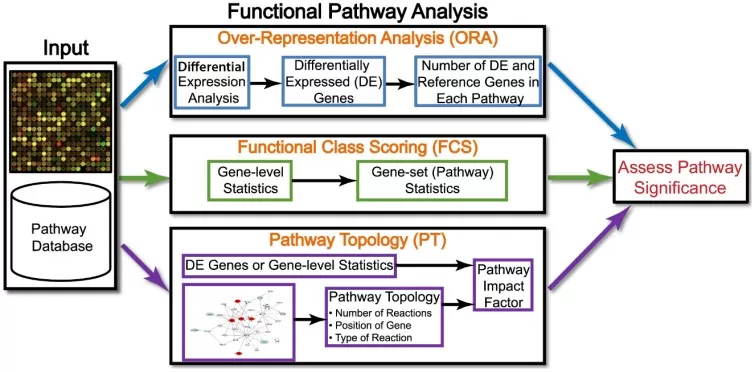
Figure 1. Overview of existing pathway analysis methods using gene expression data as an example. Image reproduced from Khatri et al., 2012, PLoS Computational Biology, 8(2), e1002375.
The analysis requires three fundamental inputs: (1) a list of significant features from differential analysis, (2) an appropriate background or reference set, and (3) a functional annotation database that maps individual features to biological categories. Statistically, ORA evaluates whether the observed overlap between the significant feature list and each annotated gene set exceeds random expectation, typically within a contingency-table framework.
Early applications of over-representation-style functional interpretation in genome-scale expression studies can be traced to 1999 (Tavazoie et al., 1999), and the general strategy has since been extended across transcriptomics, proteomics, metabolomics, and lipidomics. Its enduring popularity stems from conceptual clarity, computational efficiency, and interpretability, although robust use still depends on careful background selection, annotation quality, and multiple-testing control.
2. THE STATISTICAL FOUNDATION OF ORA
The statistical engine underlying most ORA implementations is the hypergeometric test, which is equivalent to the one-sided Fisher's exact test when applied to a 2 × 2 contingency table. The table is constructed by cross-tabulating feature counts across two dimensions: membership in the significant list (yes/no) and membership in the functional category of interest (yes/no).
For a given functional category, the hypergeometric test calculates the probability of observing at least k overlapping features by chance, given that n features are drawn from a total population of N features containing K members of that category. This yields a p-value for each tested category. Because ORA typically evaluates hundreds to thousands of categories simultaneously, p-values are corrected for multiple testing using procedures such as the Benjamini-Hochberg false discovery rate (FDR) correction or the more conservative Bonferroni adjustment (Benjamini and Hochberg, 1995). Results passing the adjusted significance threshold (commonly FDR < 0.05) are reported as enriched categories.
_1777280201_WNo_262d262.webp "Figure 2. Conceptual diagram of over-representation analysis (ORA)")
Figure 2. Conceptual diagram of over-representation analysis (ORA). Figure reproduced from Wieder et al., 2021, PLOS Computational Biology, 17(9): e1009105, under CC BY 4.0.
3. HOW ORA WORKS: A STEP-BY-STEP WORKFLOW
Executing an ORA analysis involves a series of interconnected decisions, each of which can substantially influence the final results (Reimand et al., 2019). The following workflow outlines the major stages and highlights key considerations at each step.
Step 1: Defining the Significant Feature List
The first step involves obtaining a list of features that meet predefined significance criteria from a differential analysis. In transcriptomics, this typically involves applying fold-change thresholds (e.g., |log2FC| > 1) and adjusted p-value cutoffs (e.g., padj < 0.05) to RNA-seq or microarray results. In proteomics, analogous thresholds are applied to protein abundance ratios and statistical significance. For metabolomics and lipidomics, significant metabolites are identified through similar statistical testing with appropriate corrections for multiple comparisons.
A critical consideration at this stage is that the choice of threshold directly determines the feature list and, consequently, the ORA results. More stringent thresholds yield shorter lists with higher confidence in individual features but may miss borderline but biologically relevant changes. More lenient thresholds capture broader biological effects but introduce noise. This threshold dependency is one of the most recognized limitations of the ORA approach (Subramanian et al., 2005).
Step 2: Selecting an Annotation Database
The annotation database provides the functional mapping between individual features and biological categories. Several widely used databases serve different analytical purposes:
- Gene Ontology (GO): Provides a structured, hierarchical vocabulary describing three complementary aspects of gene function: biological process (BP), molecular function (MF), and cellular component (CC). GO terms range from broad (e.g., "metabolic process") to highly specific (e.g., "inositol catabolic process"), enabling analysis at multiple levels of granularity.
- KEGG Pathway: Maps genes and metabolites to curated metabolic and signaling pathways, providing a more integrated view of molecular interactions within specific biological contexts.
- Reactome: Offers a peer-reviewed pathway database that emphasizes detailed mechanistic descriptions of cellular processes, including signal transduction, metabolism, and cell cycle regulation.
- MSigDB: The Molecular Signatures Database curated by the Broad Institute contains thousands of gene sets organized into collections (H, C1–C8), offering an extensive resource for both ORA and GSEA analyses.
For metabolomics-specific analyses, dedicated databases such as the Small Molecule Pathway Database (SMPDB), Human Metabolome Database (HMDB), and metabolite sets within MetaboAnalyst provide functional mappings tailored to metabolic pathways and biochemical transformations.
Step 3: Performing the Statistical Test
With the feature list and annotation database in place, the ORA test is executed by iterating over every functional category in the database. For each category, a 2 × 2 contingency table is constructed and a hypergeometric test (or Fisher's exact test) is performed. The result is a ranked list of functional categories with associated p-values and, after multiple testing correction, adjusted p-values (q-values or FDR).
Most modern tools automate this process while offering options to control parameters such as the minimum and maximum size of tested gene sets, the statistical test, and the multiple testing correction method. Filtering gene sets by size is often important in practice: very small sets can yield unstable p-values, whereas very large sets often return broad, weakly specific terms. The exact size thresholds should therefore be chosen in the context of the annotation database and study design.
 and GSEA methods_1777280239_WNo_773d559.webp "Figure 3. Pathway enrichment analysis workflow using ORA (gProfiler) and GSEA methods")
Figure 3. Pathway enrichment analysis workflow using ORA (g:Profiler) and GSEA methods. Image reproduced from Reimand et al., 2019, Nature Protocols, 14(2), 482–517.
Step 4: Interpreting and Visualizing Results
Interpreting ORA results requires evaluating multiple metrics simultaneously. The adjusted p-value (or q-value) indicates statistical confidence, while the enrichment ratio—defined as the observed proportion of features in the category divided by the expected proportion—provides a measure of effect size. Categories with low q-values and high enrichment ratios represent the most robust findings.
Visualization plays a central role in communicating ORA results. The most common formats include:
- Dot plots (bubble charts): Display enrichment categories on the y-axis, with dot size proportional to gene set size and dot color indicating statistical significance, enabling simultaneous evaluation of multiple enrichment metrics.
- Bar plots: Show the negative log10-transformed q-value (or enrichment score) for the top enriched categories, providing a straightforward ranked view of results.
- Enrichment maps: Visualize relationships between enriched categories as networks, where nodes represent individual categories and edges connect categories with substantial gene overlap, helping summarize higher-order biological themes.
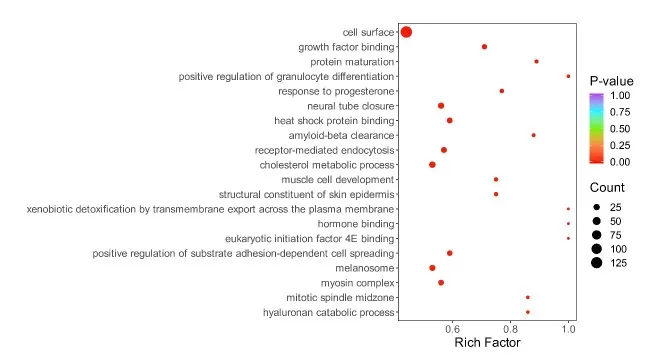
Figure 4. GO Enrichment Analysis Bubble Plot. A common visualization for interpreting and presenting ORA results.
4. POPULAR ORA TOOLS AND PLATFORMS
A diverse ecosystem of software tools and web platforms is available for performing ORA, each offering different features, database coverage, and analytical capabilities. Selecting the appropriate tool depends on the specific experimental context, the omics discipline involved, and the user's computational expertise.
4.1 R/Bioconductor Packages
R-based tools offer the greatest flexibility and are well suited for researchers who require reproducible, script-based analytical pipelines. clusterProfiler is one of the most widely used Bioconductor packages for functional enrichment analysis, supporting ORA and GSEA across multiple organisms, annotation sources (GO, KEGG, Reactome, MSigDB, and others), and omics data types (Wu et al., 2021). It provides a unified interface for enrichment testing, result manipulation, and publication-quality visualization. The complementary package enrichplot extends clusterProfiler's visualization capabilities, while org.Hs.eg.db and other organism annotation packages supply the underlying gene-to-category mappings.
4.2 Web-Based Platforms
Web-based tools provide accessible, user-friendly interfaces that require no programming knowledge:
- g:Profiler (Kolberg et al., 2023): A comprehensive web tool for functional enrichment analysis and gene identifier mapping across many organisms and databases, with support for ordered queries, custom statistical backgrounds, and programmatic interfaces.
- Enrichr (Kuleshov et al., 2016): An integrative platform that offers large collections of gene set libraries spanning pathway databases, transcription factor targets, disease associations, ontologies, and other functional categories, together with interactive result visualizations.
- DAVID (Huang et al., 2009): A long-standing web-based enrichment resource that provides functional annotation clustering to group related terms and reduce redundancy in enrichment output.
5. APPLICATIONS OF ORA ACROSS OMICS DISCIPLINES
ORA has been applied across virtually every branch of omics research, with specific adaptations to accommodate the unique characteristics of different molecular data types.
5.1 Transcriptomics and Proteomics
In transcriptomics, ORA is most commonly applied to lists of differentially expressed genes derived from RNA-seq or microarray experiments. The analysis identifies enriched GO terms and KEGG pathways, providing functional context for observed expression changes. For example, in cancer research, ORA of tumor versus normal tissue comparisons routinely reveals enrichment of cell cycle, DNA repair, and immune-related pathways (Khatri et al., 2012).
In proteomics, ORA follows an analogous workflow applied to lists of differentially abundant proteins. The interpretation is broadly similar, though protein-level data introduce additional considerations such as protein isoform mapping and post-translational modification-specific enrichment. The availability of high-quality protein-protein interaction databases also enables the application of network-based enrichment methods that complement traditional ORA.
5.2 Metabolomics and Lipidomics
ORA has been adapted for metabolomics through metabolite set enrichment analysis (MSEA), which applies the same general statistical framework to metabolite-level data. Rather than mapping to gene-based annotations, metabolites are mapped to metabolic pathways or metabolite sets. In practice, interpretation also depends heavily on metabolite identifier harmonization, pathway coverage, and how ambiguous compound annotations are handled (Wieder et al., 2021). MetaboAnalyst provides a widely used framework for metabolomics enrichment and pathway analysis (Pang et al., 2024).
Lipidomics presents additional challenges because structurally related lipid species may map imperfectly onto pathway databases, and lipid-specific pathway resources remain less comprehensive than gene-centric annotation systems. Despite these constraints, ORA-style approaches using lipid metabolism pathways, lipid class annotations, and custom curated lipid sets can still be valuable for interpreting coordinated lipidomic changes in disease and physiology.
5.3 Multi-Omics Integration
In multi-omics studies that combine transcriptomics, proteomics, and metabolomics data, ORA serves as a complementary tool within integrative analysis frameworks. One common strategy involves performing separate enrichment analyses for each omics layer and then comparing the resulting pathways to identify biological processes that are consistently perturbed across molecular levels. More formal integrative methods, such as ActivePathways, combine evidence across datasets using statistical data fusion to identify pathways supported by one or multiple omics layers (Paczkowska et al., 2020). These approaches leverage the complementary information captured by different omics technologies and can provide a more comprehensive view of the underlying biology.
6. COMMON PITFALLS AND BEST PRACTICES FOR ORA
Despite its apparent simplicity, ORA is susceptible to several analytical pitfalls that can compromise the validity and interpretability of results. Awareness of these issues and adoption of corresponding best practices are essential for reliable enrichment analysis.
6.1 Key Limitations to Be Aware Of
- Threshold dependency: Small changes in significance cutoffs can change the input list and produce different enrichment results.
- Gene set size bias: Very small gene sets can give unstable results, while very large sets often return broad, low-information terms.
- Background set selection: An inappropriate background can distort enrichment statistics and lead to false positives or false negatives (Wieder et al., 2021; Ziemann et al., 2024).
- Multiple testing burden: Testing many categories at once increases false discovery risk, while strict correction can also reduce sensitivity.
- Annotation incompleteness: Functional databases remain uneven across genes, pathways, species, and omics layers.
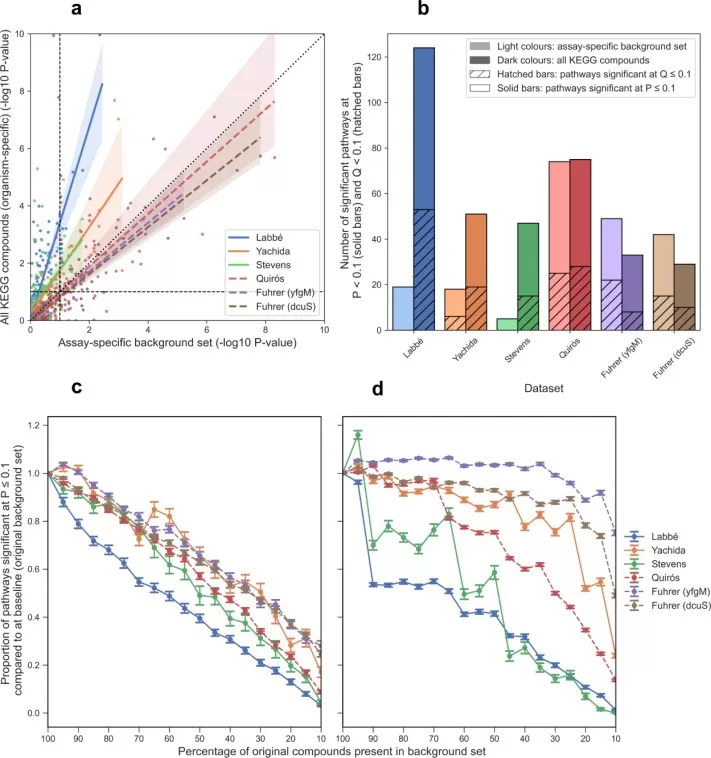
Figure 5. Effect of background set selection on ORA results. Figure reproduced from Wieder et al., 2021, PLOS Computational Biology, 17(9): e1009105, under CC BY 4.0.
6.2 Best Practices to Address These Challenges
- Use complementary methods: ORA and GSEA together provide a more balanced view of pathway-level changes.
- Test threshold sensitivity: Run ORA with more than one cutoff and focus on stable enrichments (Wieder et al., 2021).
- Use an experiment-specific background: Use measured proteins, expressed genes, or detected metabolites rather than the full annotated genome.
- Apply gene set size filters: Remove extremely small or overly broad categories to improve interpretability.
- Cross-check multiple databases: Compare results across GO, KEGG, and Reactome to reduce annotation bias.
- Report methods clearly: State thresholds, background definition, statistical test, multiple-testing correction, and filtering criteria.
How MetwareBio Supports Enrichment Analysis in Omics Projects
Functional enrichment analysis is a critical component of any omics data interpretation pipeline, but its value depends on the quality of both the upstream experimental data and the bioinformatic expertise applied at each analytical step. From differential analysis to gene set testing, from annotation database selection to result visualization, each decision influences the biological conclusions drawn from the data.
MetwareBio provides end-to-end multi-omics services that encompass study design, sample preparation, data acquisition, and comprehensive bioinformatic analysis. The bioinformatics team performs functional enrichment analysis—including ORA, GSEA, and integrative pathway analysis—as part of standard analytical deliverables for transcriptomics, proteomics, metabolomics, and lipidomics projects. Multiple annotation databases (GO, KEGG, and others) are employed to ensure thorough and balanced functional interpretation.
Contact the MetwareBio team to discuss how comprehensive enrichment analysis can be integrated into your next omics project, and request a detailed project consultation or customized quote.
Contact UsRead More: Pathway Analysis & Omics Statistics
Continue exploring pathway enrichment methods, statistical approaches, and multi-omics integration strategies for deeper biological insights.
Compare ORA and GSEA methods side-by-side: learn when to use each approach, their statistical foundations, and how to choose the right method based on your dataset characteristics and research questions.
A solid enrichment analysis starts with sound differential expression testing. Review practical choices between t-tests, ANOVA, and non-parametric alternatives, including guidance on normality testing and effect size estimation for proteomics datasets.
After identifying enriched pathways, visualize relationships between omics features using correlation heatmaps. This guide covers Pearson vs Spearman correlation, clustering methods, and interpretation strategies for multi-omics data.
Complement your pathway analysis with proper dimensionality reduction. Understand the differences between unsupervised PCA and supervised PLS-DA/OPLS-DA methods for extracting meaningful patterns from high-dimensional omics data.
Explore Reactome as an alternative pathway database for enrichment analysis. Learn how Reactome's peer-reviewed, mechanistic pathway annotations can provide detailed biological context for your ORA and GSEA results.
Move beyond single-layer enrichment by combining transcriptomics, proteomics, and metabolomics data. Discover integrative approaches, data fusion methods, and visualization strategies for comprehensive multi-omics analysis.
References
- Benjamini, Y., and Hochberg, Y. (1995). Controlling the false discovery rate: a practical and powerful approach to multiple testing. Journal of the Royal Statistical Society: Series B, 57(1), 289–300. https://doi.org/10.1111/j.2517-6161.1995.tb02031.x
- Huang, D.W., Sherman, B.T., and Lempicki, R.A. (2009). Systematic and integrative analysis of large gene lists using DAVID bioinformatics resources. Nature Protocols, 4(1), 44–57. https://doi.org/10.1038/nprot.2008.211
- Khatri, P., Sirota, M., and Butte, A.J. (2012). Ten years of pathway analysis: current approaches and outstanding challenges. PLoS Computational Biology, 8(2), e1002375. https://doi.org/10.1371/journal.pcbi.1002375
- Kolberg, L., Raudvere, U., Kuzmin, I., Adler, P., Vilo, J., and Peterson, H. (2023). g:Profiler—interoperable web service for functional enrichment analysis and gene identifier mapping (2023 update). Nucleic Acids Research, 51(W1), W207–W212. https://doi.org/10.1093/nar/gkad347
- Kuleshov, M.V., Jones, M.R., Rouillard, A.D., Fernandez, N.F., Duan, Q., Wang, Z., Koplev, S., Jenkins, S.L., Jagodnik, K.M., Lachmann, A., McDermott, M.G., Monteiro, C.D., Gundersen, G.W., and Ma'ayan, A. (2016). Enrichr: a comprehensive gene set enrichment analysis web server 2016 update. Nucleic Acids Research, 44(W1), W90–W97. https://doi.org/10.1093/nar/gkw377
- Paczkowska, M., Barenboim, J., Sintupisut, N., Fox, N.S., Zhu, H., Abd-Rabbo, D., et al. (2020). Integrative pathway enrichment analysis of multivariate omics data. Nature Communications, 11, 735. https://doi.org/10.1038/s41467-019-13983-9
- Pang, Z., Lu, Y., Zhou, G., Hui, F., Xu, L., Viau, C., et al. (2024). MetaboAnalyst 6.0: towards a unified platform for metabolomics data processing, analysis and interpretation. Nucleic Acids Research, 52(W1), W398–W406. https://doi.org/10.1093/nar/gkae253
- Reimand, J., Isserlin, R., Voisin, V., Kucera, M., Tannus-Lopes, C., Rostamianfar, A., et al. (2019). Pathway enrichment analysis and visualization of omics data using g:Profiler, GSEA, Cytoscape and EnrichmentMap. Nature Protocols, 14, 482–517. https://doi.org/10.1038/s41596-018-0103-9
- Subramanian, A., Tamayo, P., Mootha, V.K., Mukherjee, S., Ebert, B.L., Gillette, M.A., et al. (2005). Gene set enrichment analysis: a knowledge-based approach for interpreting genome-wide expression profiles. Proceedings of the National Academy of Sciences, 102(43), 15545–15550. https://doi.org/10.1073/pnas.0506580102
- Tavazoie, S., Hughes, J.D., Campbell, M.J., Cho, R.J., and Church, G.M. (1999). Systematic determination of genetic network architecture. Nature Genetics, 22, 281–285. https://doi.org/10.1038/10343
- Wieder, C., Frainay, C., Poupin, N., Rodríguez-Mier, P., Vinson, F., Cooke, J., Lai, R. P., Bundy, J. G., Jourdan, F., & Ebbels, T. (2021). Pathway analysis in metabolomics: Recommendations for the use of over-representation analysis. PLoS Computational Biology, 17(9), e1009105. https://doi.org/10.1371/journal.pcbi.1009105
- Wu, T., Hu, E., Xu, S., Chen, M., Guo, P., Dai, Z., et al. (2021). clusterProfiler 4.0: A universal enrichment tool for interpreting omics data. The Innovation, 2(3), 100141. https://doi.org/10.1016/j.xinn.2021.100141
- Ziemann, M., Schroeter, B., and Bora, A. (2024). Two subtle problems with overrepresentation analysis. Bioinformatics Advances, 4(1), vbae159. https://doi.org/10.1093/bioadv/vbae159